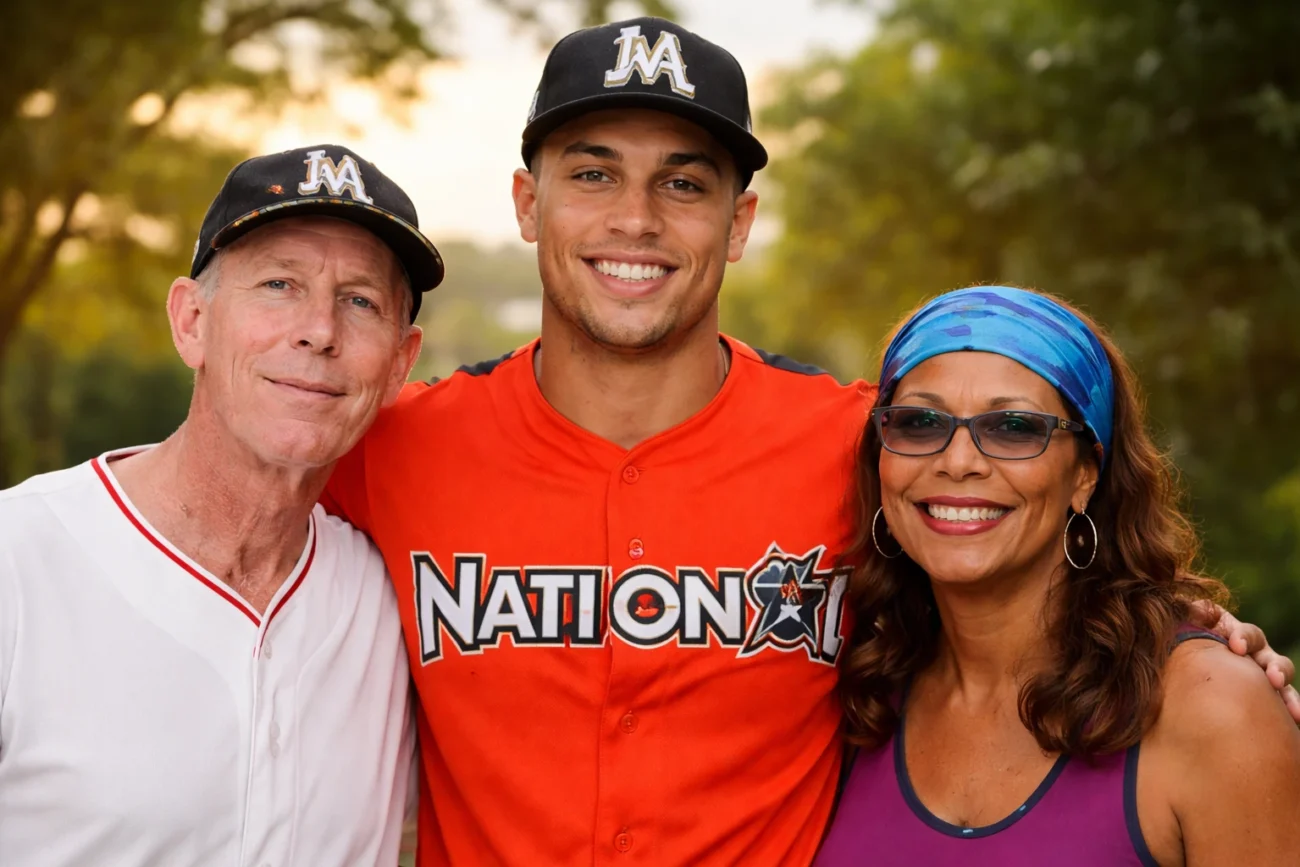
Jacinta Garay’s name surfaces most often in the margins of sports headlines, a quiet presence attached to one of baseball’s most recognizable figures. She is not a celebrity in the traditional sense, nor someone who has sought public attention. Yet her identity carries weight because of her role in shaping the life and background of her son, Major League Baseball star Giancarlo Stanton. For many readers, the search for Jacinta Garay begins with curiosity about Stanton’s heritage and upbringing. What they find instead is a portrait of a private woman whose influence is clearer than her public footprint.
That contrast—between visibility and privacy—defines much of Garay’s story. In an era when the families of athletes often become public figures themselves, she has remained largely outside that spotlight. What can be known about her comes from credible reporting tied to Stanton’s life, along with careful interpretation of the limited details that have entered the public record. The result is a biography that is less about headlines and more about context, heritage, and the unseen role of family in shaping a public life.
Early Life and Family Background
Very little has been independently documented about Jacinta Garay’s early life, including her exact birthplace, date of birth, or education. This absence is not unusual for individuals who have not pursued public careers or media-facing roles. What has been consistently reported, however, is her Puerto Rican heritage, which has become an important part of her son’s identity and public narrative.
Garay’s background connects directly to Stanton’s understanding of himself as a multiracial American. In interviews and profiles, Stanton has described his heritage as African-American, Irish, and Puerto Rican, with the latter coming through his mother’s side. That detail has been repeated in reputable outlets, including ESPN, and remains one of the clearest pieces of verified information about Garay’s identity.
Her life before becoming a parent remains largely private, and there is no substantial public record of a professional career or public-facing role during that time. Some secondary websites have attempted to fill in those gaps with specific claims about her upbringing or work history, but these details often lack sourcing and should be treated with caution. What remains clear is that Garay lived in Southern California during her son’s childhood, forming part of the family environment that would shape his early years.
Marriage and Family Life
Jacinta Garay was married to Mike Stanton, the father of Giancarlo Stanton. Their relationship, like many private family matters, has not been extensively documented in mainstream reporting. However, multiple sources have noted that the couple separated or divorced when their son was still young, often cited as around eight years old.
Following that separation, Stanton was raised primarily in Southern California, where both parents remained part of his life. His father has been more visible in media accounts, particularly in stories about early baseball training and mentorship. Garay’s role, by contrast, appears less frequently in published narratives, though it is clear she remained a consistent presence in her son’s upbringing.
Family structure plays an important role in understanding Stanton’s development. Growing up in the Los Angeles area, he was exposed to competitive sports at a young age, attending Notre Dame High School in Sherman Oaks, a school known for producing professional athletes. While much of the storytelling around his early athletic life centers on his father’s coaching influence, that does not diminish the role of his mother in providing stability and support.
Raising a Future MLB Star
Giancarlo Stanton’s rise to baseball prominence did not happen in isolation. It was shaped by a combination of natural ability, disciplined training, and family involvement. His father’s well-documented role included working overnight shifts at the U.S. Postal Service and then taking his son to practice, a routine that became part of baseball lore.
Garay’s role in that process is less publicly detailed, but it is reasonable to understand her contribution within the broader context of parenting a young athlete. Raising a child with elite athletic potential requires coordination, emotional support, and long-term commitment. Even when one parent becomes the visible figure in sports narratives, the other often provides equally important, if less visible, support behind the scenes.
What’s striking is how Stanton himself has spoken about identity rather than just performance. His decision to move away from the name “Mike Stanton,” which he used earlier in his career, and embrace “Giancarlo” reflects a deeper connection to his heritage. That heritage, tied to his mother’s background, suggests that Garay’s influence extended beyond daily logistics into shaping how her son understood himself.
The Name “Giancarlo” and Cultural Identity
The story behind Giancarlo Stanton’s name is one of the more revealing aspects of his personal journey. As a child and young athlete, he often went by “Mike,” a simpler name that blended more easily into American sports culture. Over time, however, he chose to return to his given name, Giancarlo, a decision that carried both personal and cultural significance.
That change was not just cosmetic. It reflected a growing comfort with standing out and embracing a fuller version of his identity. His Puerto Rican heritage, linked to his mother, became part of that story. Interviews and profiles have suggested that Stanton’s relationship with his name evolved as he matured, moving from discomfort to pride.
Garay’s role in this aspect of her son’s life is not extensively documented, but the connection is implicit. A name carries family history, and reclaiming it often signals a deeper acknowledgment of one’s roots. In this sense, Garay’s influence can be seen not only in upbringing but also in the cultural identity her son ultimately chose to embrace publicly.
Public Appearances and Media Presence
Jacinta Garay has made very few public appearances in connection with her son’s career. One of the most visible instances comes from an MLB Mother’s Day feature that included photographs of players with their mothers, where she was identified alongside Giancarlo Stanton. Beyond that, her presence in media archives is minimal.
This limited visibility stands in contrast to many modern sports families, where parents often participate in interviews, social media storytelling, or brand partnerships. Garay’s absence from that ecosystem suggests a deliberate choice to maintain privacy rather than engage with public attention.
There are occasional photographs from events earlier in Stanton’s career, including appearances during his time with the Miami Marlins. These images confirm her presence at key milestones but do not offer detailed insight into her personal life. The lack of interviews or direct quotes from Garay herself further underscores her preference for staying out of the spotlight.
Online Misinformation and Biography Inflation
A search for Jacinta Garay today produces a surprising volume of content. Many websites present detailed biographies, complete with birth dates, career histories, and financial estimates. The problem is that much of this information lacks clear sourcing and often appears duplicated across multiple sites.
This pattern is common for individuals connected to high-profile figures. As public interest grows, so does the demand for content, and some platforms fill that demand with speculative or recycled information. In Garay’s case, the result is a digital profile that appears far more detailed than the verifiable record supports.
Readers should approach such claims with caution. Reliable information about Garay is largely limited to her identity as Stanton’s mother and her role in his family background. Details about her personal career, finances, or early life remain unconfirmed in mainstream reporting. The difference between documented fact and repeated assumption is essential when understanding her story.
Financial Standing and Net Worth
There is no credible public record of Jacinta Garay’s personal net worth. Estimates found online are speculative and not backed by financial disclosures, interviews, or reputable reporting. Without verifiable data, assigning a figure to her wealth would be misleading.
That said, her son Giancarlo Stanton has earned significant income through his MLB career, including a record-setting contract signed with the Miami Marlins in 2014. His financial success has been widely documented, with earnings in the hundreds of millions of dollars over the course of his career.
Garay’s financial situation, however, should not be conflated with her son’s. While she may benefit indirectly from family support, there is no public evidence detailing her personal assets or income sources. The distinction between an athlete’s wealth and a parent’s financial standing is important, especially in cases where the parent has not maintained a public business profile.
Personal Life and Privacy
One of the defining aspects of Jacinta Garay’s biography is her privacy. Unlike many individuals connected to public figures, she has not cultivated a public persona or media presence. There are no widely recognized interviews, social media profiles, or public statements that provide insight into her personal views or daily life.
This level of privacy can be interpreted in different ways. For some, it reflects a desire to maintain normalcy despite a connection to fame. For others, it may indicate a conscious decision to separate personal identity from public narrative. Either way, it shapes how her story is told.
What remains is a portrait built largely from context rather than direct testimony. Garay is known through her relationship to her son, her cultural background, and her place in a family story that has been partially documented through sports journalism. Beyond that, much of her life remains her own.
Where Jacinta Garay Is Now
There is no detailed public record of Jacinta Garay’s current activities or location. She has not been prominently featured in recent media coverage related to Giancarlo Stanton’s career, and there are no confirmed reports about her professional or personal endeavors in recent years.
What can be assumed, based on her long-standing privacy, is that she continues to live outside the public eye. Unlike figures who become part of an athlete’s brand or public narrative, Garay has remained consistent in her low-profile approach.
Her absence from headlines does not diminish her significance. Instead, it reinforces the idea that not all influential figures seek recognition. In Garay’s case, her impact is best understood through the life and identity of her son rather than through direct public engagement.
Frequently Asked Questions
Who is Jacinta Garay?
Jacinta Garay is best known as the mother of Major League Baseball player Giancarlo Stanton. She has remained a private individual, with limited public information available about her personal life beyond her family connection.
What is Jacinta Garay’s background?
Garay is of Puerto Rican heritage, which forms part of her son’s multiracial identity. Specific details about her early life, education, and career have not been widely documented in reliable sources.
Was Jacinta Garay involved in Giancarlo Stanton’s upbringing?
Yes, she was part of his upbringing, although most public stories focus more on his father’s role in athletic training. Garay’s influence is understood within the broader context of family support and stability.
Is Jacinta Garay a public figure?
She is not a public figure in the traditional sense. Her recognition comes primarily from her relationship to Giancarlo Stanton rather than from independent public achievements or media presence.
What is Jacinta Garay’s net worth?
There is no verified information about her net worth. Any figures found online are speculative and not supported by credible sources.
Why is there so much information about her online?
Much of the content about Garay online comes from repeated or unsourced biography pages. Public interest in her son has led to increased attention, but not all published details are reliable.
Conclusion
Jacinta Garay’s story stands apart from the typical narratives that surround the families of high-profile athletes. She has not turned proximity to fame into a public identity, nor has she allowed curiosity to reshape her private life. Instead, she remains a figure defined by connection rather than exposure.
Her influence, while not extensively documented, is still meaningful. It appears in the heritage her son claims, the name he chose to embrace, and the family foundation that supported his rise. Those elements offer a glimpse into her role without overstepping the boundaries of what is known.
There is something quietly instructive about that balance. In a culture that often demands visibility, Garay’s story suggests another path—one where impact does not require attention, and where a life can matter deeply without being fully public.
As long as Giancarlo Stanton remains part of baseball’s ongoing story, Jacinta Garay’s name will continue to surface. The most honest way to understand her is to accept both what is known and what remains private, and to recognize that not every important figure leaves a detailed public record behind.
