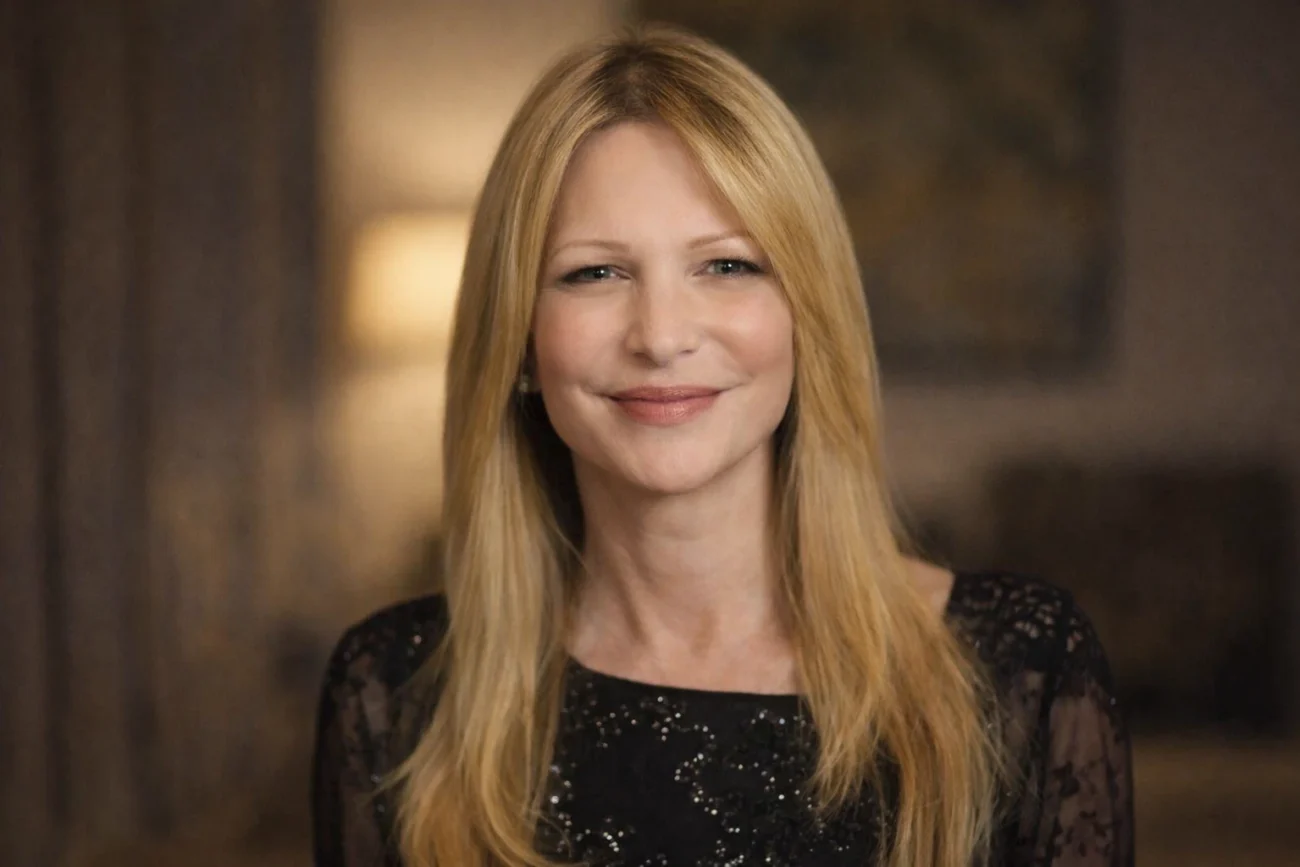
Dana York did not set out to become a public figure. For most of her life, she lived well outside the glare that follows celebrity culture, working, raising a family, and maintaining a level of privacy that would later feel almost unusual. But in 2001, when she married Tom Petty—one of America’s most enduring rock musicians—her life shifted into a different orbit. After Petty’s death in 2017, that shift became permanent, placing her at the center of both a grieving family and a complex legacy that continues to evolve.
Her story, as it exists in the public record, is not one of fame pursued but of visibility acquired. It unfolds in fragments: a marriage that brought stability to a musician’s later years, a family navigating loss under scrutiny, a legal battle that exposed internal tensions, and, more recently, a quieter role in preserving a cultural archive. For readers searching “Dana York,” what emerges is less a conventional celebrity biography and more a portrait of someone who has consistently resisted being defined solely by proximity to fame.
Early Life and Background
Dana York was born in May 1964 in the United States, and much of her early life unfolded in Michigan. Compared to the well-documented upbringing of her late husband, her childhood remains largely private, with few confirmed details available in public records or major interviews. That absence has led to a proliferation of loosely sourced claims online, but the verified information remains limited and should be treated carefully.
What is clearer is the environment she has described in her own words. In a rare 2024 interview, she spoke about growing up near General Motors’ Fisher Body Plant No. 1, a detail that connects her early life to a working-class American industrial setting. It’s a small but telling glimpse, suggesting a background shaped less by entertainment circles and more by everyday American life.
Her education and early career have been the subject of speculation, with many online profiles asserting that she worked in education, including claims that she served as a school principal. These claims appear frequently but are not consistently backed by strong primary sources. As a result, they remain part of the broader narrative but not firmly established facts in the way her later life events are.
First Marriage and Family Life
Before meeting Tom Petty, Dana York had already been married and had a son named Dylan. This part of her life is more reliably referenced, particularly through her own later recollections. Her role as a mother has remained a consistent thread throughout her story, often appearing in the few personal anecdotes she has shared publicly.
Unlike many figures who later become connected to celebrity culture, Dana’s early adulthood was not documented in real time by the media. This has contributed to the sense that her life before Petty exists in partial outline rather than full detail. Still, what does come through is a sense of stability and responsibility, especially in her role as a parent.
That earlier family life would later merge with Tom Petty’s, creating a blended household that included his daughters, Adria and Annakim. The integration of these relationships would become an important part of the family dynamic, especially after Petty’s death, when questions of legacy and authority brought those relationships into sharper public focus.
Meeting Tom Petty
Dana York and Tom Petty first met in the 1990s, reportedly at one of his concerts, though the exact details vary depending on the source. What is clear is that their relationship developed over time, eventually becoming a significant part of Petty’s personal life during a period when he was navigating both professional success and personal challenges.
By the time they married in 2001, Petty was already an established icon, known for decades of work with the Heartbreakers and a string of hit records. The wedding took place on June 3, 2001, in Las Vegas, shortly after Petty performed two sold-out shows at the Hard Rock Hotel. The setting was informal by celebrity standards, reflecting a preference for intimacy over spectacle.
For Petty, the marriage marked a new chapter. Friends and collaborators have often suggested that his relationship with Dana brought a sense of grounding to his life, though such assessments are inevitably shaped by hindsight. What can be confirmed is that the couple remained together for the rest of Petty’s life, a period that included both continued musical output and a quieter domestic routine.
Marriage, Family, and Private Life
Despite Petty’s fame, the couple kept much of their daily life out of the spotlight. This was not accidental. Dana York was not someone who cultivated media attention, and Petty himself had long expressed discomfort with the more intrusive aspects of celebrity culture. Their shared preference for privacy shaped how their marriage was presented to the world.
In the limited glimpses available, their life together appears grounded in ordinary routines. Dana has described driving Petty and her son Dylan to Little League games, running errands, and spending time together away from the stage and studio. These moments, though small, offer a counterpoint to the larger-than-life image often associated with rock musicians.
The couple also engaged in charitable work. In 2011, Tom and Dana Petty were honored by The Midnight Mission, a Los Angeles-based organization that supports people experiencing homelessness. They had previously hosted a benefit concert for the group, indicating that their involvement went beyond symbolic gestures.
That said, Dana remained largely behind the scenes. Even as Petty continued to tour and release music, she did not become a regular public presence. Her role was more personal than professional, rooted in family life rather than public identity.
Tom Petty’s Final Years and Death
The final years of Tom Petty’s life brought renewed attention to his career, culminating in a major tour celebrating the 40th anniversary of the Heartbreakers. It was a demanding schedule, and in hindsight, it would take on added significance.
Petty died on October 2, 2017, at the age of 66. The official cause of death was later determined to be an accidental drug overdose, with multiple medications found in his system. According to statements from his family, including Dana York, he had been dealing with serious health issues, including a fractured hip, emphysema, and chronic pain.
The public nature of his death, combined with the broader context of the opioid crisis, made it a moment of national attention. Dana York’s voice, along with that of Petty’s daughters, became part of the effort to explain what had happened. Their statement emphasized both the accidental nature of the overdose and the physical toll Petty had endured in his final months.
For Dana, this period marked a transition from private partner to public representative of a legacy. It was a role she had not sought but could not avoid.
Estate Dispute and Legal Battle
In 2019, Dana York became a central figure in a legal dispute involving Tom Petty’s estate. His daughters, Adria and Annakim, filed a lawsuit challenging aspects of how the estate was being managed. The case drew significant media attention, in part because it highlighted tensions within a family still dealing with loss.
The dispute centered on control over the estate’s business decisions, including the release and management of Petty’s music and intellectual property. It was not simply a financial matter but also a question of artistic stewardship. Who had the authority to decide how Petty’s work would be presented to the world?
The lawsuit was eventually settled later that year. The parties agreed to form Tom Petty Legacy, LLC, with Dana York and Petty’s daughters sharing equal authority. In a joint statement, they expressed regret over the conflict and acknowledged the strain it had placed on their relationships.
The resolution did not erase the tensions that had surfaced, but it established a framework for moving forward. It also underscored the complexity of managing the legacy of a major artist, where personal relationships and professional responsibilities often intersect.
Life After the Settlement
Following the settlement, Dana York’s public role became less confrontational and more administrative. She continued to be involved, along with Petty’s daughters and collaborators, in overseeing the release of archival material and the broader management of his legacy.
This work has included major projects such as box sets, reissues, and documentary efforts that draw on Petty’s extensive catalog. While Dana is not always the public face of these projects, her involvement is part of the structure that makes them possible.
There have also been moments where she has stepped forward in a more personal way. In 2024, she spoke publicly about selling a 1965 Ford Mustang that Tom Petty had given her. The decision was tied to charitable goals, with proceeds intended to support organizations such as The Midnight Mission and MusiCares.
These appearances are rare, but they offer insight into how she approaches her role. Rather than seeking visibility, she seems to engage with the public when there is a clear purpose, often connected to memory, charity, or the preservation of Petty’s work.
Public Image and Media Coverage
Dana York’s public image has been shaped as much by absence as by presence. She does not give frequent interviews, does not maintain a high-profile social media presence, and does not appear regularly at industry events. This has made her something of an enigma, especially in a media environment that often expects constant visibility.
As a result, much of the coverage about her has been reactive rather than proactive. Her name appears in connection with specific events—her marriage, Petty’s death, the estate dispute—rather than as part of an ongoing public narrative.
This has also contributed to the spread of misinformation. In the absence of detailed, primary-source reporting, many online profiles have filled in the gaps with repeated or unverified claims. Sorting through these requires a careful distinction between what is widely said and what is actually supported by reliable evidence.
What emerges from that process is a more restrained but more credible portrait. Dana York is not a celebrity in the conventional sense. She is a private individual whose life intersected with fame and who has had to navigate the consequences of that intersection.
Financial Standing and Net Worth
Discussions of Dana York’s net worth are common online, but they are often speculative. As the widow of Tom Petty, she is associated with an estate that includes music royalties, publishing rights, and other assets tied to a long and successful career.
However, precise figures are not publicly confirmed. Estimates vary widely depending on the source and the methodology used. What can be said with confidence is that the value of Tom Petty’s catalog remains significant, and the management of that catalog is a central part of the estate’s ongoing activity.
Dana’s role in that structure suggests financial stability, but it does not translate neatly into a single, verifiable number. Readers should approach any specific net worth claims with caution unless they are backed by credible financial reporting.
Where Dana York Is Now
As of recent years, Dana York continues to maintain a low public profile. She remains connected to the management of Tom Petty’s legacy through the structure established after the 2019 settlement. This includes involvement in decisions related to archival releases and the broader presentation of his work.
At the same time, her personal life remains largely out of view. She has not sought to build a public persona independent of her connection to Petty, and there is little evidence to suggest that she intends to do so.
What is visible are occasional, purposeful appearances tied to charity or specific projects. These moments reinforce a consistent pattern: engagement on her own terms, with a focus on substance rather than visibility.
Frequently Asked Questions
Who is Dana York?
Dana York, also known as Dana Petty, is the widow of musician Tom Petty. She became publicly known through her marriage to him and later through her role in managing his estate and legacy. Her own background remains relatively private compared to many public figures.
When did Dana York marry Tom Petty?
Dana York married Tom Petty on June 3, 2001, in Las Vegas. The wedding took place shortly after Petty performed two shows at the Hard Rock Hotel. They remained married until his death in 2017.
Did Dana York have children?
Yes, Dana York has a son named Dylan from a previous marriage. After marrying Tom Petty, she became part of a blended family that included his daughters, Adria and Annakim.
What was the estate dispute about?
In 2019, Tom Petty’s daughters filed a lawsuit against Dana York over control of the estate and its business decisions. The dispute was resolved later that year with the creation of a joint management structure, giving all parties equal authority.
What does Dana York do now?
Dana York remains involved in managing Tom Petty’s legacy, including archival releases and related projects. She maintains a low public profile and appears occasionally in connection with charitable efforts or specific initiatives.
Is Dana York a public figure?
Dana York is not a public figure in the traditional sense. While she is known due to her connection to Tom Petty, she has not pursued a public career and generally avoids media attention.
Conclusion
Dana York’s story is shaped by contrast. She began in relative anonymity, entered a high-profile marriage, and then found herself navigating the public responsibilities that come with loss and legacy. Through it all, she has maintained a consistent preference for privacy, even as circumstances have required her to step forward at key moments.
Her life illustrates the often unseen side of celebrity culture, where partners and families carry responsibilities that extend far beyond the spotlight. Managing a legacy is not only about preserving work but also about balancing memory, business, and relationships.
What stands out is not a pursuit of fame but a steady presence in moments that matter. Whether through family statements, legal negotiations, or charitable efforts, Dana York has shaped her public role in ways that reflect both restraint and responsibility.
As interest in Tom Petty’s music continues, so too does the quiet relevance of the people who help carry that legacy forward. Dana York remains one of those figures—present, influential, and still largely defined by what she chooses not to make public.
