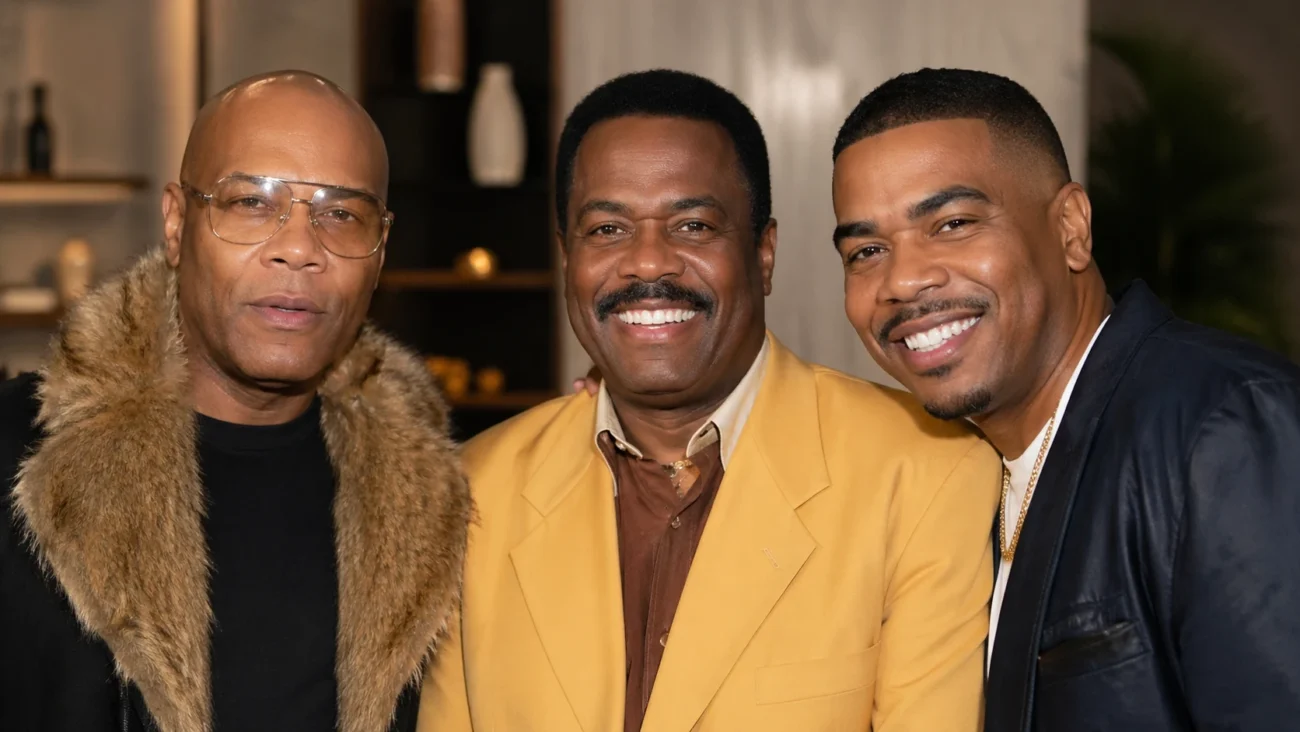
Tommy Gooding belongs to one of those American entertainment families where the surname arrives before the person does. For many readers, the name first connects to Cuba Gooding Jr., the Oscar-winning actor from Jerry Maguire, or to Cuba Gooding Sr., the soulful voice behind The Main Ingredient’s classic “Everybody Plays the Fool.” Tommy’s own public life has been quieter, built less around red carpets than rehearsal rooms, bass lines, bandstands, and family legacy.
That quieter profile is part of what makes him interesting. Tommy Gooding is commonly described as a musician, bassist, and musical director, a working artist tied to a famous family but not defined only by its fame. His life story is not as heavily documented as those of his father or brothers, and responsible biography has to say that plainly. What can be said with confidence is that he comes from a family where performance was not an abstract dream; it was the household trade.
Early Life and Family Background
Tommy Gooding was born into a family already shaped by music, stage work, and the hard unpredictability of show business. Public profiles commonly place his birth in New York, often identifying The Bronx as his birthplace, though online sources have not always agreed on his exact birth year. Many profiles list June 3 as his birthday, with 1980 frequently given as the year, but some secondary websites have repeated different dates. That uncertainty is a useful reminder that not every biographical detail attached to low-profile public figures should be treated as settled fact.
His father, Cuba Gooding Sr., was the defining musical figure in the family. As the lead singer of The Main Ingredient, he helped carry one of the great smooth-soul records of the 1970s into popular memory. “Everybody Plays the Fool” became the group’s signature song, and its easy polish hid the emotional precision that made it last. Growing up around that legacy would have meant seeing music as both art and labor.
Tommy’s mother is widely identified in public profiles as Shirley Gooding, and his siblings include Cuba Gooding Jr., Omar Gooding, and April Gooding. Cuba Gooding Jr. became the family’s most internationally recognized screen actor after winning the Academy Award for Best Supporting Actor for Jerry Maguire. Omar Gooding built a long career across television, film, comedy, and music, while April Gooding has also worked in entertainment. Tommy’s path, by contrast, stayed closer to the musical side of the family inheritance.
The Gooding household is often discussed through fame, but the more revealing story may be continuity. One generation sang lead on soul records, another carried the name into Hollywood, and Tommy worked in the kind of role that often supports performance without dominating the marquee. That family background helps explain both the curiosity around him and the confusion. People search for him expecting a celebrity biography, but what they often find is the outline of a working musician’s life.
Growing Up Around Music
A child raised near a professional musician learns early that performance is not only applause. There are rehearsals, road schedules, changing lineups, money pressures, and nights when the room gives energy back only if the band earns it. Tommy Gooding’s later work as a bassist and music director makes sense against that kind of upbringing. The bass is not usually the loudest voice in a band, but it is one of the instruments that decides whether the music feels alive.
Cuba Gooding Sr.’s career would have given Tommy a view into soul music’s golden period and its long afterlife. The Main Ingredient’s biggest songs did not disappear when the charts moved on; they kept circulating through radio, nostalgia tours, compilations, and family memory. That kind of songbook can become a responsibility for the children of performers. It asks them to honor the past without turning it into a museum piece.
Tommy’s musical identity appears to have formed around musicianship rather than celebrity performance. Public profiles commonly identify him as a bassist, and the bass is a revealing instrument for someone from a famous family. It requires discipline, timing, listening, and a willingness to serve the whole arrangement. In that way, his chosen role seems to match his public image: present, essential, but not always demanding the spotlight.
Education and Musical Training
Tommy Gooding is widely reported to have studied music at Five Towns College in Dix Hills, New York. Five Towns has long been associated with music, media, business, and performing arts education, making it a plausible setting for someone aiming at professional musicianship. Public information does not provide a full record of his coursework, degree details, or instructors. Still, the repeated connection to formal music study fits the professional direction his life appears to have taken.
Training matters because the kind of work associated with Tommy is not casual. A bassist who also works as a musical director needs to understand arrangements, tempo, cues, transitions, and the personalities of singers and instrumentalists. The job can require quiet authority more than visible charisma. A music director has to make other people sound better while making the whole performance feel natural.
That is especially true in legacy R&B and soul settings, where audiences often arrive with deep emotional attachments to songs. They know the choruses, they remember the records, and they can sense when a performance feels rushed or hollow. A good music director must respect the original feeling while making the show work in the room that night. Tommy Gooding’s reported training and career path suggest someone who approached music as craft, not simply as family inheritance.
Career as a Bassist and Musical Director
Tommy Gooding’s clearest public identity is as a bassist and musical director. He has been connected in public profiles with groups and artists including Circular Time, GQ, and guitarist JJ Sansavarino. He is also widely described as having directed his father’s band, a role that links him directly to the Gooding family’s musical roots. These details form the strongest available picture of his professional life.
Bass players often have careers that are easier to hear than to document. They may not appear in large headlines, but their work shapes the entire character of a live performance. In funk, soul, R&B, and jazz-influenced music, the bass line can carry the groove, settle the band, and give singers a foundation. A weak bassist exposes every seam; a strong one can make a room relax without most listeners knowing why.
As a musical director, Tommy would have had a broader responsibility than playing his own instrument. That work can include choosing arrangements, preparing sets, coordinating musicians, managing rehearsals, and keeping performances faithful to the artist’s identity. It is not glamorous in the easy public sense, but it can be central to whether a show succeeds. For a musician tied to Cuba Gooding Sr.’s catalog, the stakes would have been both professional and personal.
The Main Ingredient Connection
The Main Ingredient remains the most important musical context around Tommy Gooding. The group formed before Cuba Gooding Sr. became its lead singer, but his voice became closely tied to its best-known period. “Everybody Plays the Fool,” released in the early 1970s, became one of those records that outlived its chart moment. Its smooth arrangement, wounded lyric, and elegant vocal delivery made it a standard of grown-up heartbreak.
Cuba Gooding Sr. did not merely have a famous son; he had a serious career of his own. He carried The Main Ingredient through hits, touring, lineup changes, and the long second life that classic soul performers often build. For Tommy, that family connection was not only biographical. It was also a musical education in how songs survive across decades.
Public profiles that say Tommy directed his father’s band point to a son helping preserve and present that legacy. That role would have required a difficult balance. Audiences came for memory, but live musicians cannot simply press play on the past. They have to recreate feeling in real time, with real voices, real rooms, and all the imperfections that make live music human.
Life in a Famous Entertainment Family
Being a Gooding means living near several kinds of fame. Cuba Gooding Sr. represented soul music history, while Cuba Gooding Jr. brought the family name into major Hollywood recognition. Omar Gooding became familiar to television audiences through acting and later expanded his creative work in other directions. Tommy’s public life sits beside those careers without copying them.
That difference can lead to misunderstanding. Some readers assume that every member of a famous family must be famous in the same way, with the same public record and the same media coverage. Tommy Gooding’s life does not fit that pattern. His career seems to reflect the steadier, less visible track of a musician who works because music is the work, not because attention is the goal.
There is also a certain pressure built into that surname. A Gooding entering entertainment is never starting from a blank page, because audiences bring assumptions with them. Those assumptions can open doors, but they can also flatten a person into a family footnote. Tommy’s quieter career is a reminder that legacy can be both inheritance and shadow.
Public Attention and Private Boundaries
Tommy Gooding is not a celebrity who has built his life around public disclosure. Compared with his actor siblings and his late father, he has left a smaller public trail. That makes him a magnet for thin online biographies, many of which repeat claims about his age, net worth, marriage, or career without showing strong evidence. A careful account has to resist turning repetition into proof.
The most respectful way to write about him is to distinguish known public information from claims that remain uncertain. His identity as a Gooding family member and musician is well established across public profiles. His exact finances, full private family life, and detailed career chronology are much less firmly documented. That distinction does not weaken the story; it makes it more honest.
Private boundaries are especially important for people who are searchable because of relatives. Tommy did not become a major tabloid fixture, and there is no reason to treat gaps in his public record as mysteries that must be solved by guesswork. Some lives are public only in part. A serious biography should know the difference between curiosity and intrusion.
Marriage and Personal Life
Tommy Gooding is commonly reported to have married Seydurah Avecmoi in 2019. This detail appears in public-facing biography profiles, though the couple has not made the kind of high-profile media circuit that would produce extensive interviews or coverage. There is limited reliable public information about their day-to-day life together. That is not unusual for someone whose career is known but whose private life has remained mostly private.
There is also no strong public basis for broad claims about children, household details, or personal arrangements beyond what has been shared or repeated in biographical sources. Many websites try to satisfy search demand by filling in missing details, but biography should not work that way. If a personal fact is not clearly established, it should not be dressed up as certainty. Tommy’s public story can be told without pretending to know everything about his home life.
What can be said is that his marriage is part of a broader adult life that appears to sit outside the machinery of constant celebrity coverage. He is known through music and family, not through public scandal or a heavily managed public persona. That makes the available portrait quieter, but also less distorted by performance for attention. In some ways, that reserve is one of the defining facts about him.
Acting and Screen Credits
Some online biographies connect Tommy Gooding with acting and writing credits under the name Thomas Gooding. Public film databases have listed credits for a Thomas Gooding on small projects, including acting and writing work. The challenge is that these listings do not always provide enough biographical detail to confirm every connection beyond doubt. Because of that, it is safer to describe screen work as a secondary and less firmly documented part of his public profile.
This kind of ambiguity is common with people who have common or shortened names. A database credit can prove that a person with a given name worked on a project, but it does not always prove the full identity that later websites attach to it. In Tommy’s case, the music career has stronger and more consistent public support. Any acting or writing credits should be treated as possible additional work rather than the center of his biography.
That said, the Gooding family’s wide involvement in entertainment makes some crossover plausible. Musicians often move through film, comedy, writing, production, and live performance spaces, especially in cities where creative networks overlap. Tommy’s public identity, however, remains strongest as a musician. Until more first-hand or official material appears, that is the fairest way to frame it.
Money, Income Sources, and Net Worth Estimates
Readers often search Tommy Gooding’s net worth, but this is one of the least reliable areas of his public profile. Various entertainment websites have published estimates, often in the low to mid six figures, but those numbers are rarely tied to transparent evidence. There are no widely available public financial records that confirm his personal assets, contracts, royalties, or yearly income. For that reason, any net worth figure should be treated as an estimate, not a verified fact.
His likely income sources are easier to discuss in general terms. A working musician and music director may earn from live performance, session work, touring, private events, arrangements, production, teaching, and related entertainment work. Someone connected to a known musical family may also benefit from legacy performances or family-linked projects. None of that allows a precise number, but it does explain why estimates exist.
The more useful financial point is that Tommy Gooding does not appear to have built a public brand around wealth. There are no major verified business empires, luxury ventures, or widely reported endorsement deals attached to his name. His public record points toward work in music rather than celebrity commerce. Readers should be wary of any site that states his fortune with more confidence than the evidence allows.
Public Image and Media Presence
Tommy Gooding’s public image is shaped by absence as much as presence. He does not occupy the constant media cycle, and he is not known for loud public statements or headline-seeking behavior. For most readers, he appears through biography snippets, family references, and scattered mentions of music work. That limited visibility has created both curiosity and confusion.
The confusion comes partly from the way modern search results reward repetition. Once one website publishes a detail, many others copy it, often without checking the original source. Over time, uncertain facts can begin to look established simply because they appear in many places. Tommy Gooding’s biography is a strong example of why careful wording matters.
His more grounded public image is simpler. He is a musician from a highly recognizable entertainment family who chose a path that stayed close to performance but away from the center of celebrity culture. That image may be less dramatic than a tabloid narrative, but it is more believable. It also gives him a distinct place within the Gooding family story.
Relationship to Cuba Gooding Sr.’s Legacy
Cuba Gooding Sr.’s death in 2017 gave the family’s musical legacy a more reflective cast. For fans of classic soul, he remained the voice associated with one of the genre’s most enduring songs. For his children, he was not only a performer but a father whose career shaped the family’s sense of identity. Tommy Gooding’s musical path cannot be separated from that inheritance.
Directing or supporting a parent’s band is a complicated form of work. It asks for professionalism, but it also carries private memory into public performance. The musician has to meet audience expectations while managing the emotional weight of family history. In Tommy’s case, that meant standing near a catalog many listeners connect with youth, heartbreak, and radio memory.
The Main Ingredient’s music has lasted because it never depended only on nostalgia. Its best records were elegant, emotionally clear, and built for repeated listening. A musician who helps keep those songs alive participates in more than a family business. He helps preserve a piece of American soul music’s living record.
Where Tommy Gooding Is Now
Tommy Gooding’s current life is not heavily covered by mainstream media. Public information continues to identify him mainly as a musician and member of the Gooding family. He appears to maintain a low public profile, with much less regular coverage than his actor siblings. That lack of constant visibility should not be mistaken for disappearance.
For many working musicians, careers do not unfold through public announcements. They continue through gigs, sessions, collaborations, and private professional networks. A musician may be active without generating searchable headlines every month. Tommy Gooding seems to fit that category more than the category of celebrity whose movements are constantly documented.
Readers looking for his current projects should be careful about outdated or copied biography pages. The strongest public facts remain his family background, his work as a bassist and musical director, and his connection to his father’s music. More detailed claims about recent activity should be checked against direct artist pages, performance listings, or verified social accounts. Without that, the honest answer is that his current public status remains low-profile.
Why Tommy Gooding Still Draws Interest
Tommy Gooding draws interest because he sits at the crossing point of music history, Hollywood fame, and private creative work. His father’s career connects him to classic soul, while his brother’s success connects him to modern film history. Yet Tommy’s own public story is not one of explosive fame. It is the story of a musician whose life is partly visible through the people around him.
That makes him a different kind of biography subject. The temptation is to inflate the record, to turn sparse details into a dramatic arc with neat milestones and grand claims. The better approach is to see what the available facts actually suggest. Tommy Gooding matters because he shows how entertainment legacies continue through quieter kinds of work.
His life also says something about fame itself. Celebrity families often contain people who choose or inherit different relationships with public attention. Some become stars, some become character actors, some become musicians, and some support the machinery that lets others perform. Tommy’s place is not outside the family story; it is one of the less public ways that story continues.
Frequently Asked Questions
Who is Tommy Gooding?
Tommy Gooding is a musician, bassist, and musical director best known publicly as a member of the Gooding entertainment family. He is the son of Cuba Gooding Sr., the late lead singer of The Main Ingredient, and the brother of actor Cuba Gooding Jr. His own career has been much quieter than his famous relatives’ public lives. Most reliable public descriptions connect him to music rather than mainstream acting fame.
What is Tommy Gooding famous for?
Tommy Gooding is best known for his work as a musician and for his connection to the Gooding family. Public profiles often describe him as a bassist and musical director who has worked with bands and helped direct his father’s musical performances. He is not famous in the same way Cuba Gooding Jr. is famous as an actor. His recognition comes from a mix of family legacy and professional music work.
Is Tommy Gooding related to Cuba Gooding Jr.?
Yes, Tommy Gooding is widely identified as Cuba Gooding Jr.’s brother. The Gooding siblings also include Omar Gooding and April Gooding, both of whom have public ties to entertainment. Their father, Cuba Gooding Sr., had a major music career as the lead singer of The Main Ingredient. That family connection is one of the main reasons people search for Tommy’s biography.
What instrument does Tommy Gooding play?
Tommy Gooding is most commonly identified as a bassist. The bass is central to the kind of R&B, soul, funk, and live-band work associated with his public profile. He has also been described as a musical director, which suggests responsibilities beyond playing his own instrument. That role may include arrangements, rehearsals, set planning, and coordination with other musicians.
Is Tommy Gooding married?
Tommy Gooding is commonly reported to have married Seydurah Avecmoi in 2019. Public information about the marriage is limited, and the couple has not been widely covered in mainstream entertainment media. Because of that, personal details beyond the reported marriage should be treated carefully. His private life appears to remain mostly outside public attention.
What is Tommy Gooding’s net worth?
Tommy Gooding’s net worth has not been verified by a reliable public financial source. Some websites publish estimates, often in the six-figure range, but those figures usually do not show clear evidence. His likely income sources include music performance, music direction, and related entertainment work. Any exact number should be understood as an estimate rather than confirmed fact.
What is Tommy Gooding doing now?
Tommy Gooding appears to keep a low public profile, and there is limited recent mainstream coverage of his current work. Public sources continue to identify him mainly as a musician, bassist, and musical director. Like many working musicians, his activity may not always be reflected in major media coverage. The most accurate answer is that he remains publicly known through music and the Gooding family legacy.
Conclusion
Tommy Gooding’s story is not the loudest chapter in the Gooding family history, but it is one of the most revealing. He stands between two powerful forms of family recognition: his father’s classic soul career and his brother’s Hollywood fame. Rather than becoming a public personality built around attention, he appears to have built his identity around music.
That makes his biography harder to write but easier to respect. The available facts do not support an inflated celebrity myth, and they do not need to. A bassist and musical director from a family of performers has a story rooted in craft, continuity, and the less visible labor behind entertainment.
His place now is best understood with that balance in mind. Tommy Gooding is a public figure only in part, and that partial visibility should be handled with care. What remains clear is that his name carries a real musical inheritance, and his own work belongs to the quieter side of keeping that inheritance alive.
