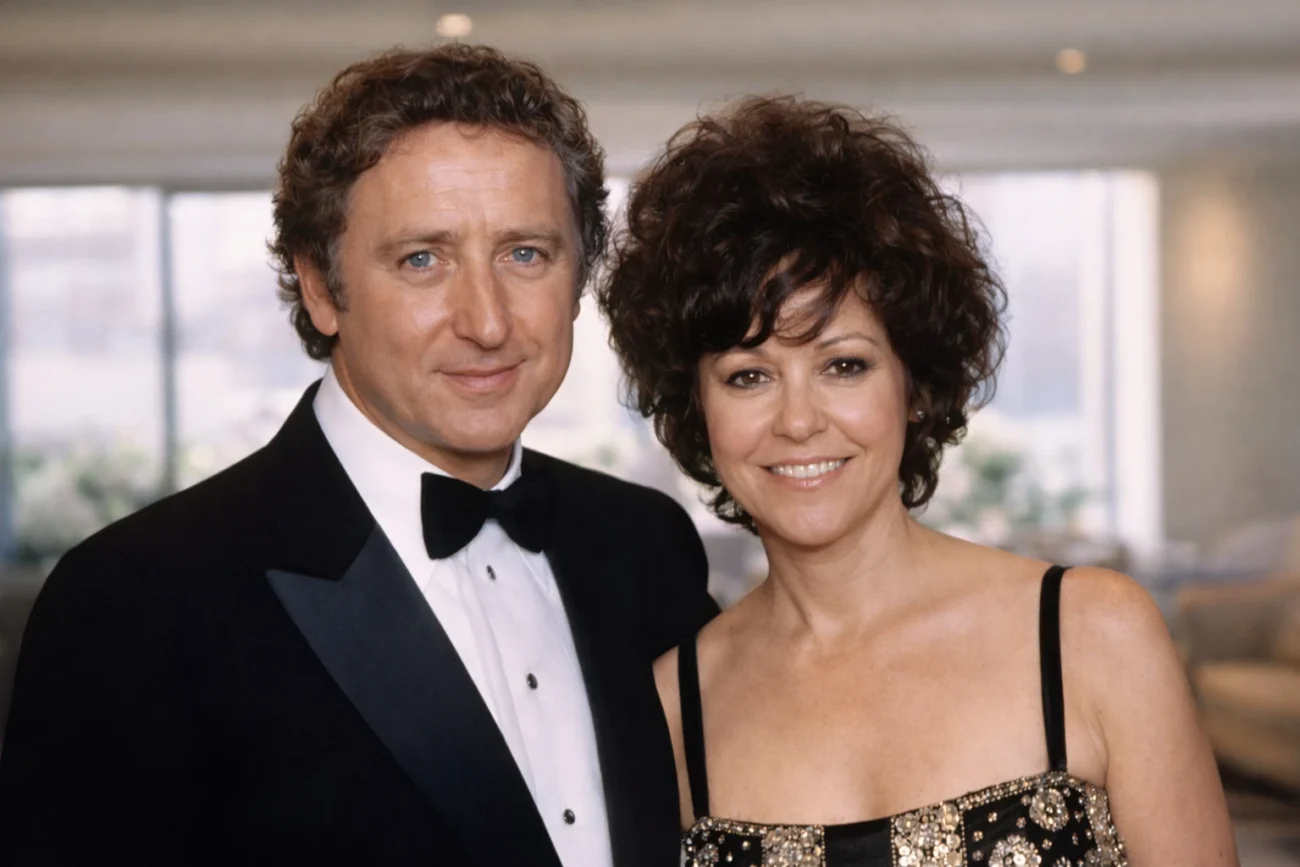
What makes Schutz compelling is not just her connection to Wilder, but the scarcity of information about her. In an age where even minor public figures are exhaustively documented, she remains largely out of view. That absence has turned her into a figure of quiet intrigue, someone people search for precisely because so little is known. To understand her, you have to look carefully at the fragments that do exist and resist the temptation to fill in the gaps with guesswork.
Early Life and Background
There is no widely verified public record detailing Mary Joan Schutz’s early life. Her date of birth, upbringing, education, and family background have not been consistently documented in reliable sources. That may seem unusual, but it reflects a broader truth about individuals who were never public figures in their own right.
Most of what is known about Schutz begins at the point where her life intersected with Gene Wilder’s. Before that, she appears to have lived outside the public eye, raising her daughter Katharine from a previous relationship. The identity of Katharine’s biological father has not been publicly confirmed, and Schutz herself did not seek visibility through media appearances or interviews.
This absence of early-life detail shapes how her story must be told. Rather than constructing a speculative childhood or career path, it is more accurate to acknowledge that her early years remain private. That privacy, maintained even after her marriage to a rising actor, suggests a person who did not pursue attention and may have actively avoided it.
Meeting Gene Wilder
Mary Joan Schutz entered the public record in the mid-1960s, during a period when Gene Wilder was still establishing himself as an actor. At the time, Wilder had already trained in theater and was building a reputation on stage, but he had not yet reached the level of fame that would later define his career.
Their relationship began after Wilder’s first marriage to Mary Mercier ended in 1965. Schutz was a single mother, and her daughter Katharine played an important role in shaping the direction of their relationship. According to widely cited accounts, Katharine began calling Wilder “Dad” before he and Schutz were married, a detail that has endured because of its emotional clarity.
That moment appears to have influenced Wilder’s decision to formalize the relationship. It wasn’t just a romantic partnership; it was a step into family life. The bond between Wilder and Katharine became central to the story, suggesting that Schutz’s life at that time revolved around motherhood as much as it did around her relationship with Wilder.
Marriage and Family Life
Mary Joan Schutz and Gene Wilder married on October 27, 1967. In the same year, Wilder adopted Katharine, making her his legal daughter. This dual commitment—to Schutz as a partner and to Katharine as a child—defined the structure of their family.
The late 1960s and early 1970s were formative years for Wilder’s career. He was transitioning from stage work into film, laying the groundwork for the roles that would later make him famous. During this period, Schutz was part of his personal life, sharing in the uncertainty and momentum that often accompany an artist’s rise.
What their day-to-day life looked like is not well documented. There are no widely available interviews from Schutz, and Wilder himself wrote about his life in a way that focused more on his internal experiences than on detailed accounts of his relationships. That leaves a portrait that is more outline than full picture.
Still, the known facts suggest a family structure that began with closeness. The adoption of Katharine was not a casual decision. It indicated a level of commitment and emotional investment that went beyond a typical Hollywood relationship, especially for a man whose career was just beginning to accelerate.
The Years of Rising Fame
As the 1970s approached, Gene Wilder’s career began to change dramatically. He gained recognition through films like The Producers and went on to star in Willy Wonka & the Chocolate Factory in 1971. These roles brought him into the public spotlight, transforming him from a working actor into a recognizable figure.
Mary Joan Schutz experienced this transition from the inside, but she did not step into the spotlight with him. There is no record of her seeking publicity, attending high-profile events in a documented way, or giving interviews about her husband’s growing fame. Her absence from the public narrative is consistent with someone who preferred a private life.
That dynamic—one partner moving into increasing visibility while the other remains out of it—can create strain, though the specifics in this case are not fully documented. What is clear is that the marriage unfolded during a period of rapid professional change for Wilder, and those changes often affect personal relationships in ways that are difficult to trace from the outside.
Divorce and Its Aftermath
Mary Joan Schutz and Gene Wilder divorced after approximately seven years of marriage, placing the end of their relationship in the early 1970s. The exact date of the divorce is not consistently reported in reliable public sources, but the duration of the marriage is widely agreed upon.
Accounts of the breakup often reference Wilder’s professional relationship with actress Madeline Kahn, his co-star in Young Frankenstein. Some biographical summaries suggest that suspicions or tensions related to that relationship contributed to the end of the marriage. However, these explanations come primarily from secondary accounts and should be treated with caution.
What is more firmly established is that the divorce had lasting emotional consequences. Later in life, Wilder spoke about an estranged relationship with his adopted daughter, Katharine. While he did not always name her directly in public discussions, biographical accounts link that estrangement to the aftermath of his divorce from Schutz.
This development adds a layer of complexity to Schutz’s story. It suggests that the end of the marriage did not simply mark a separation between two adults, but also a fracture in a parent-child relationship that had once been formalized through adoption. The details of that fracture remain largely private, but its existence is part of the documented record of Wilder’s life.
Life Away from the Spotlight
After her divorce from Gene Wilder, Mary Joan Schutz largely disappeared from the public record. There is no widely verified information about her later career, if any, or about her personal life in the decades that followed. She did not publish memoirs, grant interviews, or maintain a visible presence in entertainment or public life.
This kind of disappearance is unusual in the context of celebrity culture, where former spouses of well-known figures often remain subjects of media attention. In Schutz’s case, the opposite occurred. She seems to have stepped away entirely, maintaining a level of privacy that has endured for decades.
The truth is, very little is known about where she lived, what work she may have done, or whether she remarried. Various websites offer claims about these details, but they often lack credible sourcing and sometimes contradict one another. Without reliable confirmation, those claims are best treated as unverified.
Her absence from the public eye may reflect a deliberate choice. It suggests someone who did not define her identity through association with fame and who chose not to engage with the media attention that might have followed her marriage and divorce.
Public Image and Cultural Interest
Mary Joan Schutz does not have a public image in the traditional sense. She did not cultivate a persona, appear in films, or participate in public discourse. Instead, her image has been constructed indirectly, through references in Gene Wilder’s biography and through the curiosity of those trying to understand his personal life.
That indirect visibility has created a kind of myth around her, though it is a myth built on absence rather than presence. People search for her because they sense there is more to the story than what is readily available. But here’s the thing: the lack of detail is itself part of the reality.
In a media environment that often fills gaps with speculation, Schutz’s story stands out because it resists that process. The most responsible way to write about her is to acknowledge what cannot be known and to avoid turning silence into narrative.
Financial Status and Net Worth
There is no credible public estimate of Mary Joan Schutz’s net worth. Unlike Gene Wilder, whose earnings from film, writing, and later projects were documented and analyzed, Schutz did not have a public career that generated widely reported financial figures.
Some websites assign her a net worth, often based on assumptions about divorce settlements or association with Wilder’s success. These figures are speculative and not supported by verifiable records. Without documented sources, it is more accurate to say that her financial status remains private.
This is consistent with the broader pattern of her life. Just as her personal history is largely undocumented, her financial situation has not been part of the public record.
Relationship with Gene Wilder’s Legacy
Gene Wilder’s legacy has only grown since his death in 2016. His performances continue to be rediscovered by new audiences, and his films remain part of popular culture. As a result, interest in his personal life has persisted, drawing attention back to earlier chapters, including his marriage to Mary Joan Schutz.
Schutz’s connection to that legacy is indirect but significant. She represents a period in Wilder’s life before his most iconic roles, a time when his identity as an artist and as a family man was still taking shape. For readers trying to understand the full arc of his life, she is part of that story.
At the same time, her continued absence from public life means that her own perspective on those years is not part of the historical record. What remains is a story told largely from one side, with the other side inferred but not fully heard.
Where Mary Joan Schutz Is Now
There is no confirmed public information about Mary Joan Schutz’s current status as of 2026. It is not publicly known whether she is still alive, where she resides, or how she has spent her later years. This lack of information is consistent with her long-standing absence from public life.
That uncertainty is unusual but not unprecedented. Many individuals who were briefly connected to public figures choose to live privately and successfully avoid media attention. Schutz appears to be one of those individuals.
For readers, this means accepting that the story does not have a clear present-day chapter. The available information ends decades ago, and anything beyond that remains outside the public record.
Frequently Asked Questions
Who is Mary Joan Schutz?
Mary Joan Schutz is best known as the second wife of actor Gene Wilder. They married in 1967, and Wilder adopted her daughter, Katharine, the same year. Beyond that relationship, she has remained a largely private individual.
Was Mary Joan Schutz married before Gene Wilder?
Yes, she had a daughter, Katharine, from a previous relationship before marrying Gene Wilder. However, the identity of Katharine’s biological father and details of Schutz’s earlier marriage or relationship have not been publicly confirmed.
How long were Mary Joan Schutz and Gene Wilder married?
They were married for about seven years, from 1967 until the early 1970s. The exact date of their divorce is not consistently reported in reliable public sources.
Did Gene Wilder have children with Mary Joan Schutz?
Gene Wilder did not have biological children with Mary Joan Schutz. However, he adopted her daughter Katharine, who became his legal child during their marriage.
Why did Mary Joan Schutz and Gene Wilder divorce?
The exact reasons for their divorce are not fully documented. Some accounts suggest that tensions related to Wilder’s professional relationships may have contributed, but these claims are based on secondary sources and should be viewed with caution.
What is known about Mary Joan Schutz’s life today?
Very little is publicly confirmed about her current life. There are no reliable records detailing her whereabouts, occupation, or personal circumstances in recent years.
Conclusion
Mary Joan Schutz’s story is defined as much by what is unknown as by what is known. She appears briefly in the public record during a formative period in Gene Wilder’s life, then steps away, leaving behind a limited but meaningful trace. That trace includes a marriage, an adoption, and a family story that continues to resonate.
What stands out is her privacy. In a world where personal histories are often laid bare, Schutz remains largely out of view. That absence is not a failure of documentation so much as a reflection of her choices and circumstances.
Her connection to Gene Wilder ensures that her name will continue to surface, especially as new audiences discover his work. But her story is not simply an extension of his. It is also a reminder that many lives intersect with fame without becoming part of it.
In the end, Mary Joan Schutz matters not because she sought recognition, but because her presence shaped a chapter of someone else’s life—and because the quiet way she exited the public narrative leaves a lasting impression of its own.
