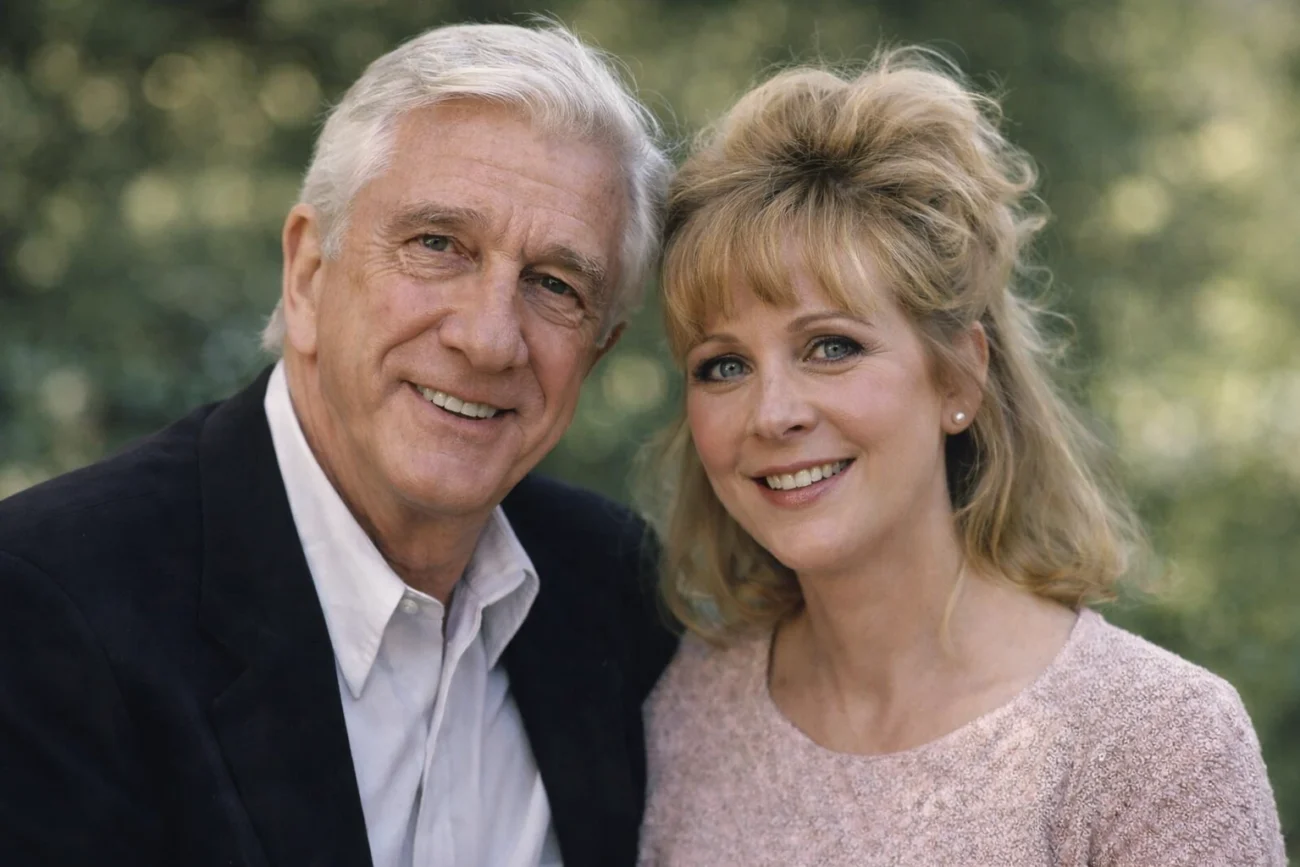
For most people, fame arrives with a trail of interviews, photographs, and public records that make a life easy to trace. Alisande Ullman’s story moves in the opposite direction. Her name appears in connection with one of Hollywood’s most recognizable comedic actors, Leslie Nielsen, yet the closer you look, the quieter her public footprint becomes. That contrast—between proximity to fame and a largely undocumented life—is exactly what draws people to search for her today.
Alisande Ullman is best known as the second wife of Leslie Nielsen, a Canadian-born actor whose career spanned decades and reached global audiences through films like Airplane! and The Naked Gun. Their marriage lasted from 1958 to 1974 and produced two daughters. Beyond those core facts, however, Ullman’s biography is defined as much by what remains unknown as by what can be confirmed. Her story offers a rare case study in privacy within a culture that often insists on visibility.
Early Life and Background
There is no widely verified public record detailing Alisande Ullman’s early life. Her date of birth, place of origin, and family background are not consistently documented in reliable primary sources. Some online profiles attempt to fill in those gaps with specific claims, but these accounts often lack clear sourcing and contradict one another.
What can be said with confidence is that Ullman entered public awareness through her association with Leslie Nielsen in the late 1950s. That timing suggests she came of age during a period when Hollywood culture still maintained a sharper divide between public figures and their private families. Many spouses of actors during that era were not expected to cultivate independent public identities, which may help explain why so little verifiable information exists about her early years.
The absence of documented background does not diminish her role in Nielsen’s life, but it does shape how her biography must be told. Rather than reconstructing a speculative childhood, a responsible account acknowledges the limits of available evidence and focuses on what can be supported by public records.
Marriage to Leslie Nielsen
Alisande Ullman married Leslie Nielsen on September 10, 1958, according to entertainment industry databases such as IMDb. At the time, Nielsen was still building his career, primarily known for dramatic roles in film and television. Their marriage placed Ullman alongside him during a formative stretch of his professional life, well before his later fame as a comedic icon.
The couple’s relationship lasted for approximately 16 years, ending in divorce in July 1974. During that time, they had two daughters, Thea Nielsen Disney and Maura Nielsen Kaplan. Both daughters would later maintain connections to the entertainment world in varying capacities, particularly Maura Nielsen Kaplan, who has acting credits to her name.
Their marriage coincided with a period when Nielsen was transitioning through different phases of his acting career. He had already appeared in notable productions, including Forbidden Planet (1956), and continued to work steadily throughout the 1960s and early 1970s. Ullman’s presence during those years suggests she was part of the personal foundation that supported his early professional trajectory, even if her own life remained largely out of the spotlight.
Television Appearances and Public Visibility
Although Alisande Ullman did not pursue a conventional acting career, she did make limited television appearances alongside her husband. One of the clearest records of her public presence comes from the 1969 television series It Takes Two, a show that featured real-life couples participating as themselves.
IMDb credits Ullman with appearing in several episodes of the series, billed under the name “Alisande Nielsen.” These appearances offer a rare glimpse of her in a public setting, interacting on screen in a format that emphasized personality rather than performance. They also reflect the media environment of the time, when celebrity couples were occasionally featured together in light entertainment programming.
What’s important here is context. Ullman’s appearances were not the beginning of an entertainment career but rather an extension of her role as Nielsen’s spouse. The show itself relied on the dynamic between couples, and her participation fits squarely within that framework. It is one of the few moments where her presence is documented in a way that goes beyond written records.
Family Life and Children
Alisande Ullman and Leslie Nielsen’s marriage produced two daughters, both of whom have maintained relatively low public profiles compared to their father. Maura Nielsen Kaplan is the more visible of the two, with acting credits that include roles in films such as Wrongfully Accused (1998) and Dracula: Dead and Loving It (1995), both of which connect back to her father’s later comedic career.
Thea Nielsen Disney, by contrast, has remained largely out of public view. Information about her life is limited, and she does not appear to have pursued a public-facing career in entertainment. This contrast between the two daughters reflects a broader pattern within the family, where public visibility varies widely from one member to another.
Family life during Ullman’s marriage to Nielsen would have unfolded during a time when actors often balanced demanding work schedules with relatively private home lives. While Nielsen’s career required travel and public appearances, there is little documented evidence describing how Ullman navigated those dynamics. What remains clear is that she was part of a family structure that persisted even after the marriage ended.
Divorce and Life After Separation
The marriage between Alisande Ullman and Leslie Nielsen ended in July 1974. Public records confirm the timing, but details about the reasons for the divorce are not widely documented. As with many aspects of Ullman’s life, the lack of detailed reporting reflects her preference—or perhaps simply her circumstance—of remaining outside the public narrative.
Following the divorce, Nielsen would go on to remarry twice more and eventually achieve his greatest fame in the late 1970s and 1980s. His comedic reinvention began with Airplane! in 1980, a role that reshaped his career and introduced him to a new generation of audiences.
Ullman, however, receded further from public view after the separation. There is no widely verified information about whether she remarried, what career path she may have pursued, or where she settled in later years. This absence of detail has led to speculation in online biographies, but those accounts often lack credible sourcing.
The truth is simpler and more honest. After her divorce from Nielsen, Alisande Ullman appears to have chosen—or been able—to live a life largely outside the reach of public documentation. In an era before social media and constant digital exposure, such privacy was more attainable than it is today.
Public Image and Media Representation
Alisande Ullman’s public image is shaped almost entirely by her association with Leslie Nielsen. Unlike many individuals connected to celebrities, she did not cultivate a media presence or participate in interviews that might have defined her identity on her own terms.
As a result, modern portrayals of Ullman often rely on secondhand narratives. Many online articles describe her as a “private” or “mysterious” figure, but these labels are more reflective of the absence of information than of any documented personality traits. Without direct quotes, interviews, or public statements, it is difficult to construct a fully realized public persona.
This has created an unusual situation. Ullman is both visible and invisible at the same time. Her name appears in databases, family histories, and television credits, yet her voice is largely absent from the record. For readers, this requires a different approach to understanding her life—one that accepts uncertainty rather than trying to fill it with assumptions.
Financial Status and Net Worth
There is no reliable public data regarding Alisande Ullman’s personal net worth. Some websites attempt to assign estimated figures, but these numbers are not supported by verifiable financial records or credible reporting.
Leslie Nielsen, by contrast, had an estimated net worth of around $20 million at the time of his death in 2010, according to various industry estimates. However, it would be inaccurate to draw direct conclusions about Ullman’s financial status based on Nielsen’s later success, particularly since their marriage ended years before his most lucrative period.
Without documented business ventures, public financial disclosures, or confirmed inheritance details, any discussion of Ullman’s wealth remains speculative. A responsible biography acknowledges that uncertainty rather than presenting unverified figures as fact.
Where Alisande Ullman Is Now
One of the most common questions surrounding Alisande Ullman is also the hardest to answer: where is she today? There is no widely confirmed public information about her current location, activities, or even whether she is still alive.
Several recent articles openly acknowledge this gap, noting that Ullman has remained out of the public eye for decades. In an age where many people maintain digital footprints, her absence stands out. It suggests a life lived deliberately outside the structures that generate public visibility.
That does not mean she disappeared entirely. It means that her life, after a certain point, ceased to intersect with the kinds of institutions—media, entertainment, public events—that produce widely accessible records. For readers, this is a reminder that not all lives connected to fame remain part of the public story.
The Challenge of Writing About Private Figures
Alisande Ullman’s biography highlights a broader issue in modern media: how to write about individuals who are connected to fame but have not sought it themselves. The temptation to create a complete narrative is strong, especially when search demand exists. But completeness should not come at the expense of accuracy.
In Ullman’s case, the most responsible approach is to distinguish clearly between what is documented and what is not. That means resisting the urge to embellish, speculate, or borrow details from unverified sources. It also means recognizing that privacy, in itself, is a valid and meaningful aspect of a person’s life.
There is a quiet integrity in that kind of biography. It respects the boundaries of the historical record while still offering readers a clear understanding of who the person is and why they matter.
Frequently Asked Questions
Who is Alisande Ullman?
Alisande Ullman is best known as the second wife of actor Leslie Nielsen. She was married to him from 1958 to 1974 and is the mother of his two daughters. Her public record is limited, and she has not maintained a visible independent career in entertainment.
Did Alisande Ullman have a career in acting?
There is no evidence that Ullman pursued a professional acting career. She appeared as herself on the television series It Takes Two in 1969, but these appearances were connected to her role as Nielsen’s spouse rather than a separate acting path.
How many children does Alisande Ullman have?
Alisande Ullman has two daughters with Leslie Nielsen: Thea Nielsen Disney and Maura Nielsen Kaplan. Maura has worked as an actress, while Thea has remained largely private.
Why is there so little information about her?
Ullman’s limited public profile reflects a life lived largely outside the spotlight. She did not participate in interviews or public-facing work that would generate extensive documentation, and much of her life took place before the digital age.
Is Alisande Ullman still alive?
There is no widely confirmed public information about her current status. Some sources suggest she may still be alive, but there is no authoritative record confirming her whereabouts or activities in recent years.
What was her role in Leslie Nielsen’s career?
Ullman was married to Nielsen during his early and mid-career years. While she was part of his personal life during that time, there is no documented evidence that she played a direct role in shaping his later success in comedy.
Conclusion
Alisande Ullman’s life resists the usual structure of celebrity biography. There are no dramatic career arcs, no widely quoted interviews, and no clear public narrative beyond her connection to Leslie Nielsen. What remains instead is a quieter story, defined by family, a period of shared public visibility, and a long stretch of private life.
That quietness is not a gap to be filled but a reality to be respected. In a culture that often rewards exposure, Ullman’s absence from the spotlight offers a different kind of perspective. It reminds us that not every life linked to fame becomes a public story, and not every person seeks to be known beyond their immediate world.
For readers, the value of her biography lies in its honesty. It provides a clear account of what can be verified while acknowledging the limits of what is known. That balance is what turns a sparse record into a meaningful portrait.
And perhaps that is the most accurate way to understand Alisande Ullman. Not as a mystery waiting to be solved, but as a person whose life, for the most part, unfolded away from the lens—and stayed there.
