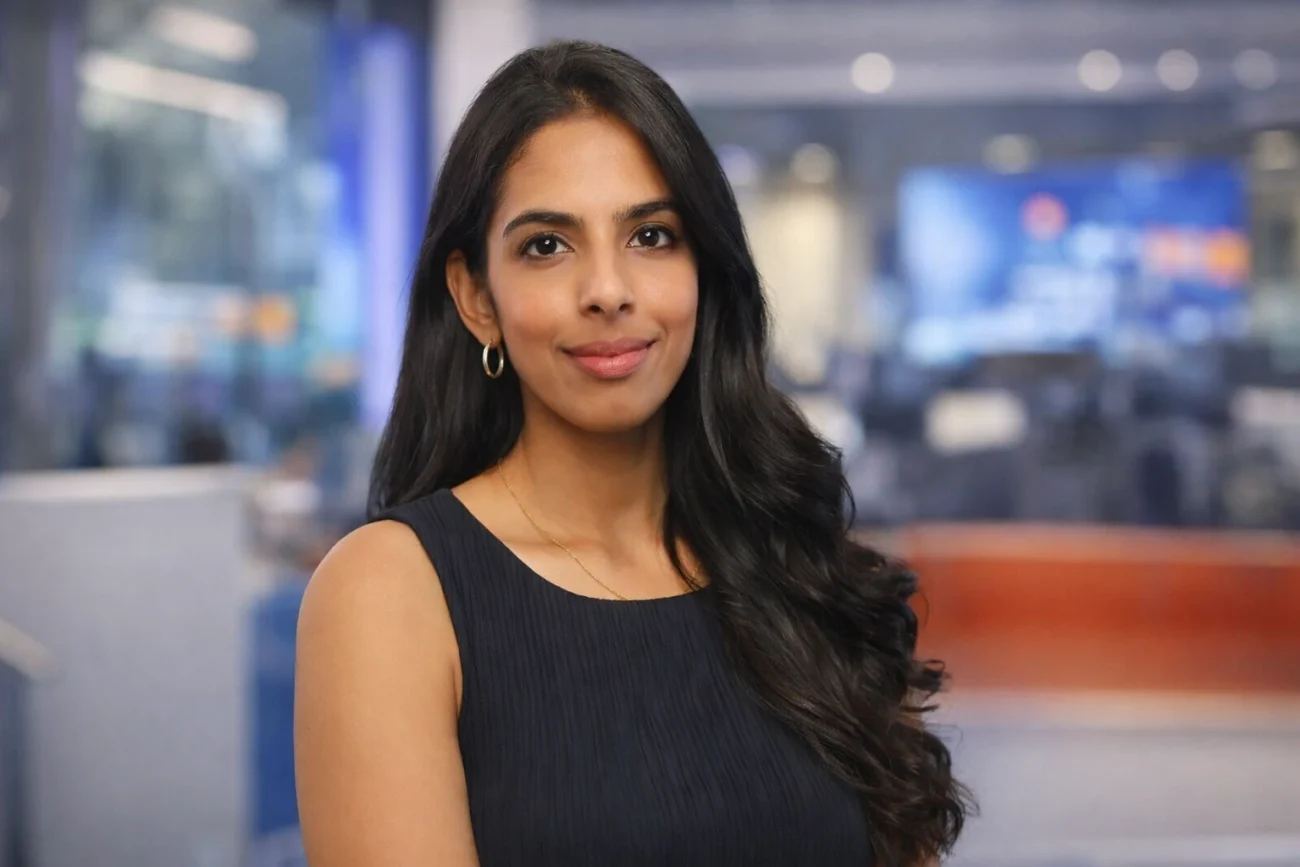
On a BBC Verify segment breaking down a disputed airstrike, Merlyn Thomas stands in a role that barely existed a decade ago. She is not simply relaying what officials say or summarizing events from afar. Instead, she is guiding viewers through fragments of video, satellite imagery, timestamps, and expert interpretation, building a case piece by piece in real time. It is a quiet shift in how journalism works, and Thomas has become one of the visible faces of that change.
Her name has begun to circulate beyond newsroom circles, appearing in search results and social media discussions whenever BBC Verify publishes a high-profile investigation. Yet the interest in her is not driven by celebrity in the usual sense. It comes from a growing public curiosity about how information is tested in an era flooded with competing claims, manipulated footage, and rapidly spreading rumors. Thomas’s career sits directly at that intersection.
What makes her story compelling is not a dramatic personal narrative but a professional one shaped by the demands of modern reporting. She represents a generation of journalists trained to question not just what happened, but how we know it happened. That distinction defines her work and explains why her name now draws attention.
Early Life and Background
Compared with many public figures, Merlyn Thomas has kept her personal background largely out of the spotlight. Reliable public information about her early life, including details about her family, childhood, or hometown, remains limited. This is not unusual for journalists, who often maintain a boundary between their reporting work and their private lives.
What can be said with confidence is that Thomas belongs to a cohort of younger journalists who entered the field as digital media and social platforms began reshaping news consumption. That timing matters. It suggests that her professional instincts were formed in an environment where information flows quickly, sources are often decentralized, and verification is not optional but essential.
The absence of detailed personal biography has led to a proliferation of online profiles attempting to fill in the gaps. Many of these sites present specific claims about her upbringing or personal life, but they rarely provide strong sourcing. The truth is that most of those details cannot be independently confirmed, and careful reporting draws a line between what is known and what is speculative.
Education and Early Career Direction
Publicly available information about Thomas’s education is similarly sparse, though her career trajectory points to training in journalism or a closely related field. Her early work aligns with reporting disciplines that require both editorial judgment and technical skill, particularly in analyzing digital content and verifying sources.
What’s clear is that Thomas did not emerge suddenly into high-profile reporting. Like many journalists, she appears to have built her career through a series of roles that developed her expertise in fact-checking and investigative work. By the early 2020s, she was already associated with reporting on disinformation, a field that requires patience, skepticism, and the ability to track how narratives spread online.
Not many people know this, but the rise of disinformation reporting has created a distinct pathway within journalism. Reporters in this space must understand how algorithms amplify content, how bad actors manipulate images and videos, and how audiences interpret what they see. Thomas’s early career suggests she was part of that shift from the beginning.
Entry Into BBC and Focus on Disinformation
Merlyn Thomas’s professional profile became more visible through her work with the BBC, particularly in areas related to misinformation and climate-related falsehoods. By 2023, she was described publicly as a climate disinformation reporter, a role that placed her at the center of one of the most contested information environments in global media.
This period marked an important phase in her development. Climate reporting is not only about scientific data but also about how that data is interpreted, challenged, and sometimes distorted. Working in that space requires a careful balance between explaining complex issues and correcting misleading claims without amplifying them unnecessarily.
Her work during this time earned recognition within the BBC. She was shortlisted for a Rising Star award in BBC News, an acknowledgment that signaled both her skill and her growing influence within the organization. At the same time, she became involved in mentoring programs through the John Schofield Trust, moving from mentee to mentor—a shift that often reflects both experience and trust within the profession.
The Rise of BBC Verify
To understand Merlyn Thomas’s current role, it helps to look at the broader context of BBC Verify. Launched in 2023, BBC Verify was designed to bring together the corporation’s expertise in fact-checking, open-source intelligence, and verification reporting. The aim was not just to report the news but to show audiences how the news is verified.
This approach represents a significant change in editorial philosophy. Traditional reporting often presented conclusions without detailing every step of the process. BBC Verify, by contrast, makes the process part of the story. It explains how journalists assess evidence, what tools they use, and where uncertainty remains.
Thomas became one of the reporters associated with this new model. Her work reflects the unit’s emphasis on transparency and method, often involving the analysis of visual evidence, the use of satellite imagery, and collaboration with subject-matter experts. It is a form of reporting that demands both technical skill and clear communication.
Career Breakthrough and Notable Reporting
Thomas’s breakthrough as a widely recognized journalist came through her involvement in high-impact verification stories. These include investigations into conflict zones, where determining what actually happened can be both urgent and contested.
Her reporting has covered topics such as military strikes, human rights allegations, and the spread of false information during major political events. In each case, the work follows a similar pattern: identify a claim, gather available evidence, test that evidence against known facts, and present the findings with appropriate context.
One example often cited in discussions of her work is her reporting on Saudi Arabia’s Neom project. The investigation examined allegations related to forced displacement and the use of force, drawing attention from political figures and raising broader questions about accountability. It showed how verification reporting can intersect with traditional investigative journalism.
Her bylines also appear on stories involving Iran, Gaza, and Sudan, as well as fact-checking related to elections and viral social media claims. This range reflects the nature of her role rather than a specific geographic focus. The common thread is the need to verify contested information.
Reporting Style and Approach
What distinguishes Merlyn Thomas’s work is her emphasis on evidence. Rather than relying solely on official statements or eyewitness accounts, her reporting often incorporates multiple sources of verification. These can include video analysis, geolocation techniques, metadata examination, and expert consultation.
Here’s where it gets interesting. This approach requires a different kind of storytelling. Instead of presenting a single narrative, verification reporting often builds a case step by step, showing how each piece of evidence supports or challenges a claim. It invites the audience into the process, making transparency a central part of credibility.
The truth is, this style also carries risks. By exposing the methods used to verify information, journalists open themselves to scrutiny and criticism. Viewers may question not only the conclusions but also the interpretation of evidence. That dynamic has become a defining feature of modern journalism, and Thomas operates within it.
Public Image and Visibility
Despite her growing recognition, Merlyn Thomas is not a public figure in the traditional sense. She does not maintain a high-profile personal brand, and her visibility comes primarily through her work. This aligns with the ethos of many journalists who prioritize reporting over personal promotion.
That said, her association with BBC Verify has increased her public profile. As audiences become more interested in how news is produced, the reporters who explain that process gain attention. Thomas’s appearances in broadcast segments and her bylines on widely shared stories have contributed to that visibility.
The public response to her work reflects broader debates about trust in media. Supporters see verification reporting as a necessary response to misinformation, while critics sometimes question the conclusions or the framing of certain stories. Thomas, like others in her field, operates within that tension.
Personal Life and Privacy
One of the most searched aspects of Merlyn Thomas’s biography is her personal life, including questions about her age, relationships, and family. However, there is little reliable public information on these topics. She has not made her private life a focus of her public presence, and credible sources do not provide detailed accounts.
This absence of information has led to speculation, but it is important to distinguish between verified facts and unconfirmed claims. Many online profiles present personal details without clear sourcing, and repeating those claims does not make them accurate. Responsible reporting acknowledges these limitations.
The lack of publicly confirmed personal details does not diminish her professional profile. If anything, it underscores a choice to keep the focus on her work rather than her private life. In a media environment where personal branding often dominates, that approach stands out.
Awards, Recognition, and Professional Standing
While Merlyn Thomas has not accumulated a long list of widely publicized awards, her recognition within the BBC and related journalism circles is significant. Being shortlisted for a Rising Star award suggests that her contributions were noticed early in her career.
Her involvement with the John Schofield Trust as both a mentee and a mentor also reflects her standing within the industry. The Trust is known for supporting journalists at different stages of their careers, and participation in its programs often indicates a level of professional respect.
Beyond formal recognition, her influence can be measured through the impact of her reporting. Stories that reach political discussions, appear in major broadcasts, or shape public understanding of complex events are markers of significance, even if they do not always come with awards.
Financial Profile and Net Worth
Information about Merlyn Thomas’s income or net worth is not publicly disclosed. As a journalist working for the BBC, her earnings would typically fall within the range of professional salaries for senior reporters, but exact figures are not available.
Some websites attempt to estimate her net worth, but these figures are often speculative and lack credible sourcing. Without confirmed data, it is more accurate to say that her financial details remain private.
The focus on net worth is common in online searches, but it does not always align with the nature of a journalist’s career. In Thomas’s case, her professional value is better understood through her work and influence rather than financial estimates.
Current Work and Where She Is Now
As of 2026, Merlyn Thomas continues to work as a senior reporter with BBC Verify. Her recent bylines indicate ongoing involvement in international verification reporting, including analysis of conflict-related claims and investigations into disputed events.
Her work remains closely tied to the evolving challenges of modern journalism. As new technologies emerge and misinformation tactics become more sophisticated, the need for verification reporting is likely to grow. Thomas’s role places her at the center of that development.
What’s surprising is how quickly this field has become essential. A decade ago, verification was often a behind-the-scenes process. Today, it is a visible and critical part of how major news organizations operate. Thomas’s career reflects that shift.
Frequently Asked Questions
Who is Merlyn Thomas?
Merlyn Thomas is a journalist and senior reporter at BBC Verify, the BBC’s unit focused on fact-checking and verification reporting. She is known for her work on disinformation, conflict analysis, and evidence-based reporting.
What does Merlyn Thomas do at BBC Verify?
She investigates and verifies claims related to major news stories, often using tools such as video analysis, satellite imagery, and expert consultation. Her role involves both reporting findings and explaining how those findings were reached.
Is Merlyn Thomas a public figure?
She is publicly visible through her work but does not maintain a celebrity-style public profile. Her recognition comes primarily from her reporting rather than personal branding.
What is known about her personal life?
Very little is publicly confirmed. Details about her age, family, and relationships are not widely documented in reliable sources, and many online claims remain unverified.
Has Merlyn Thomas received any awards?
She was shortlisted for a Rising Star award in BBC News and has been involved in mentoring programs through the John Schofield Trust. These recognitions reflect her professional standing.
What kind of stories does she cover?
Her reporting focuses on disinformation, conflict verification, and analysis of contested claims. She has worked on stories related to international conflicts, political events, and viral misinformation.
Why is Merlyn Thomas gaining attention?
Her work with BBC Verify has increased her visibility, as audiences become more interested in how news is verified. Her reporting style, which emphasizes transparency and evidence, has drawn attention in a media environment focused on trust.
Conclusion
Merlyn Thomas represents a shift in journalism that is still unfolding. Her career is not defined by traditional milestones like celebrity status or personal branding, but by a commitment to showing how information is tested and verified. That approach has become increasingly important as audiences navigate a crowded and often confusing media landscape.
Her story also highlights the changing expectations placed on journalists. It is no longer enough to report what happened; reporters are expected to demonstrate how they know it happened. Thomas’s work meets that demand, offering a model for transparency in reporting.
There is a quiet confidence in that kind of journalism. It does not rely on dramatic presentation or strong personal narratives. Instead, it builds trust through method and clarity, inviting readers and viewers to see the process behind the conclusions.
As the challenges of misinformation continue to grow, reporters like Merlyn Thomas are likely to play an even more central role. Their work may not always attract headlines in the traditional sense, but it shapes how those headlines are understood. That is where her significance lies, and why her name is likely to remain part of the conversation.
