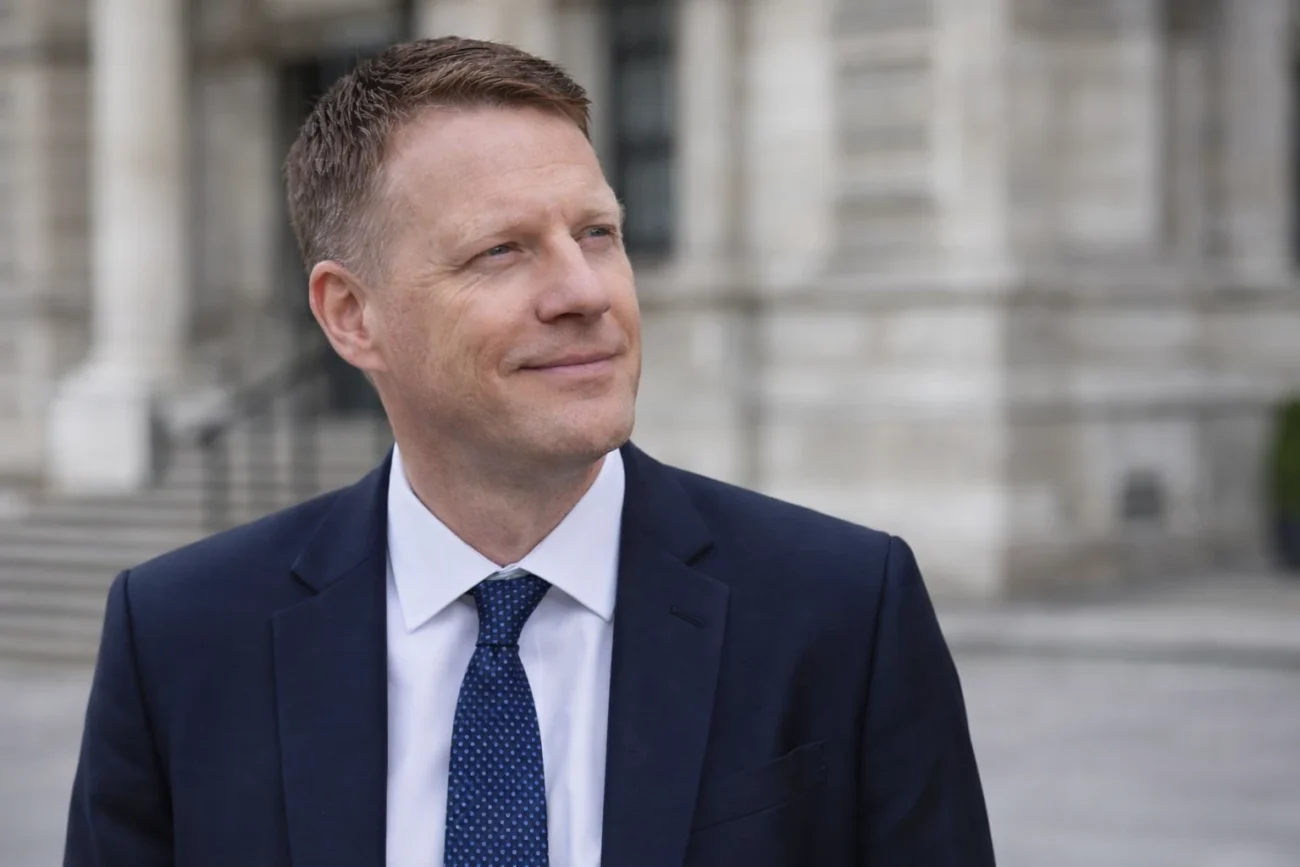
For most of his career, Nicholas Joicey has operated in a world where influence is measured not in headlines but in briefing notes, budgets, and the quiet machinery of government. Yet in recent years, his name has surfaced more frequently in public conversation, not because he sought visibility, but because of where his professional life intersects with politics at its highest level. A senior British civil servant with decades of experience across Whitehall, Joicey has built a career defined by trust, discretion, and institutional authority. His story is less about personal branding and more about the inner workings of modern governance.
Early Life and Family Background
Public information about Nicholas Joicey’s early life is limited, which is typical for someone who has spent most of his career in the civil service rather than in public-facing roles. He was born in the United Kingdom, though exact details about his birthplace and family background are not widely documented in official records. This absence of detail reflects both personal privacy and the nature of his professional path, which has never required public exposure.
What can be said with confidence is that Joicey’s early environment set him on a path toward academic and intellectual pursuits. His later achievements suggest a strong educational foundation and an early interest in history, economics, and public policy. Unlike politicians, whose early lives are often scrutinized, Joicey’s formative years remain largely outside the public domain, offering only glimpses through his academic choices and career trajectory.
Education and Intellectual Foundations
Nicholas Joicey’s academic background is one of the most clearly documented aspects of his life. He studied at the University of Bristol before continuing to the University of Cambridge, where he completed a PhD in modern history. His doctoral research focused on the cultural and political significance of Penguin Books between 1935 and the mid-20th century, a subject that placed him at the intersection of publishing history and intellectual life in Britain.
This scholarly work has been cited in academic discussions of publishing history, suggesting that his research made a meaningful contribution to the field. Not many senior civil servants have a doctoral background in history, and this detail helps explain the analytical depth often associated with his later roles. His education did not point toward a single career path but rather built a toolkit of critical thinking, writing, and interpretation that would later prove useful in government.
Early Career and Entry into Public Life
Before entering the civil service, Joicey worked in journalism, including a role at The Observer. This period is often overlooked, but it offers an important clue about his professional development. Journalism demands clarity, speed, and the ability to make complex issues understandable—skills that translate well into policy work.
His transition into government came through HM Treasury, one of the most influential departments in the British state. The Treasury is where economic policy, fiscal strategy, and international financial relations converge, and it has long been a training ground for senior civil servants. Joicey’s work there included roles in international finance, including involvement with the United Kingdom’s delegation to the International Monetary Fund and the World Bank in Washington, DC.
This early phase of his career established him as someone capable of operating at the intersection of domestic policy and global economic systems. It also positioned him within networks of influence that extend beyond the UK, giving him experience in multilateral institutions and international negotiations.
Building a Career Across Whitehall
Joicey’s career in the civil service is marked by movement across major government departments, each role building on the last. After his time at the Treasury, he took on senior positions in the Department for Environment, Food and Rural Affairs (Defra), where he focused on strategy and finance. Defra is a complex department, dealing with everything from environmental policy to agricultural regulation, and it requires a careful balance between economic and ecological priorities.
He later became Director General for Finance at the Department for Work and Pensions (DWP), one of the largest spending departments in the UK government. This role placed him in charge of overseeing vast budgets and ensuring financial accountability across programs that affect millions of people. Managing such a portfolio requires not only technical expertise but also the ability to navigate political priorities and public scrutiny.
In 2022, Joicey moved to the Cabinet Office as Director General of the Economic and Domestic Secretariat. This position is less visible but highly influential, involving coordination across departments and supporting the Prime Minister and senior ministers in decision-making processes. It is a role that requires discretion, strategic thinking, and a deep understanding of how government functions as a whole.
Appointment as Second Permanent Secretary at Defra
In July 2023, Nicholas Joicey was appointed Group Chief Operating Officer and Second Permanent Secretary at Defra. This is one of the highest-ranking positions within a government department, placing him just below the Permanent Secretary in the hierarchy. The role involves overseeing operations, ensuring efficiency, and supporting the delivery of policy objectives.
This appointment reflected a long track record of senior leadership and institutional trust. It also came at a time when Defra faced significant challenges, including environmental commitments, agricultural reform, and the ongoing impact of Brexit on regulatory frameworks. Joicey’s experience in finance and strategy made him well suited to help navigate these issues.
The title of Second Permanent Secretary is not merely ceremonial. It signals that the individual is part of the top tier of the civil service, responsible for managing large teams, significant budgets, and complex policy areas. Joicey’s appointment placed him firmly within that elite group.
Secondment to the Blavatnik School of Government
In January 2025, Joicey began a secondment to the Blavatnik School of Government at the University of Oxford, where he took on the role of Interim Chief Operating Officer. This move represents a shift from direct government work to an academic and institutional setting, though it remains closely connected to public policy.
At the Blavatnik School, Joicey works alongside academic leaders and professional staff to support teaching, research, and policy engagement. The role involves managing operations and helping implement strategic priorities, drawing on his extensive experience in government administration.
Secondments like this are not unusual in the British civil service, particularly for senior officials. They allow for the exchange of ideas between government and academia, and they provide opportunities for reflection and development outside the immediate pressures of departmental work. Joicey’s move to Oxford suggests both a recognition of his expertise and a willingness to apply it in a different context.
Personal Life: Marriage to Rachel Reeves
Nicholas Joicey is married to Rachel Reeves, the Chancellor of the Exchequer. Their relationship has brought increased public attention to his career, particularly since Reeves assumed one of the most powerful roles in British politics in July 2024. The pairing of a senior civil servant and a senior politician is unusual but not unprecedented in the UK.
The couple has children, though details about their family life are kept largely private. This discretion reflects both personal choice and professional necessity, as public scrutiny can intensify when two high-profile roles intersect within a household.
While their marriage is often mentioned in media coverage, it is important to distinguish between personal and professional domains. Joicey’s career predates Reeves’ rise to the Chancellorship, and his appointments have been based on his own record within the civil service. That said, their relationship does place them at the center of conversations about transparency and governance, particularly when questions arise about potential conflicts of interest.
Public Scrutiny and Institutional Safeguards
As with any situation involving senior public figures, Joicey’s position has attracted scrutiny. Parliamentary questions and media coverage have examined his roles and secondments, particularly in the context of his wife’s position as Chancellor. These inquiries are part of the broader system of accountability in British government.
The available public record indicates that Joicey has continued to operate within established civil service frameworks, including secondment arrangements and departmental oversight. There is no widely substantiated evidence of misconduct, but the attention itself reflects the level of interest generated when personal and professional spheres intersect at high levels of government.
This scrutiny is not unique to Joicey. It is a feature of democratic systems where transparency and accountability are central concerns. The key point is that his career remains grounded in documented roles and responsibilities rather than speculation.
Governance Roles and Broader Influence
Beyond his formal positions in government, Joicey has also been involved in governance roles, including serving as an independent trustee on the University of Bristol Board. He has chaired the university’s Finance and Investment Committee, a role that involves oversight of financial strategy and institutional sustainability.
These positions highlight a broader pattern in his career: movement between government, academia, and institutional governance. Such roles require a combination of financial expertise, strategic thinking, and an understanding of public accountability. They also extend his influence beyond the confines of Whitehall, connecting him to the wider ecosystem of public institutions.
What’s surprising is how consistent this pattern has been. Whether in a government department or a university boardroom, Joicey’s work centers on management, finance, and the effective functioning of large organizations.
Public Image and Media Perception
Nicholas Joicey’s public image is shaped less by personal narrative and more by professional reputation. He is not a frequent presence in interviews or public appearances, and there are few direct quotes or personal statements available in the public domain. This low profile is typical of senior civil servants, whose work is meant to support elected officials rather than attract attention.
Media coverage of Joicey often frames him in relation to Rachel Reeves, which can obscure his independent career. While this framing reflects public interest, it does not fully capture the scope of his professional achievements. Those who follow government closely are more likely to recognize his name from departmental announcements and policy discussions.
The truth is, Joicey’s influence is felt more than it is seen. His work takes place behind the scenes, shaping decisions and ensuring that policies are implemented effectively. This kind of influence rarely translates into public recognition, but it is essential to the functioning of government.
Financial Standing and Net Worth
There is no publicly verified figure for Nicholas Joicey’s net worth. As a civil servant, his income would primarily come from his government salary, which, for senior roles such as Second Permanent Secretary, is typically disclosed within a range rather than as a precise figure. These salaries are substantial but not comparable to those in the private sector at similar levels of responsibility.
Any estimates of his net worth found online should be treated with caution, as they are often speculative and not based on verifiable data. His financial profile is best understood within the context of public service, where compensation is structured differently from corporate or entrepreneurial careers.
Where Nicholas Joicey Is Now
As of the most recent public information, Nicholas Joicey is serving as Interim Chief Operating Officer at the Blavatnik School of Government at Oxford, on secondment from the UK Civil Service. This role places him in a setting that bridges academic research and practical policy work, allowing him to contribute to both.
His future path is not publicly defined, but his career suggests a continued presence in senior roles, whether within government, academia, or institutional governance. The combination of experience, education, and reputation he brings makes him a strong candidate for further leadership positions.
Frequently Asked Questions
Who is Nicholas Joicey?
Nicholas Joicey is a senior British civil servant who has held high-level roles in departments such as HM Treasury, Defra, the Department for Work and Pensions, and the Cabinet Office. He is also known as the husband of Chancellor Rachel Reeves, which has increased public interest in his career.
What is Nicholas Joicey’s current role?
He is currently serving as Interim Chief Operating Officer at the Blavatnik School of Government at the University of Oxford. This position is part of a secondment from the UK Civil Service.
Is Nicholas Joicey married?
Yes, he is married to Rachel Reeves, the UK Chancellor of the Exchequer. The couple has children, though they keep their family life largely private.
What is Nicholas Joicey’s educational background?
He studied at the University of Bristol and later completed a PhD in modern history at the University of Cambridge. His doctoral work focused on the cultural significance of Penguin Books.
What has Nicholas Joicey done in government?
His career includes roles in HM Treasury, the Department for Work and Pensions, Defra, and the Cabinet Office. He has worked in areas such as finance, strategy, and international economic policy.
What is Nicholas Joicey’s net worth?
There is no publicly confirmed figure for his net worth. As a senior civil servant, his income comes primarily from government salary, and any online estimates should be treated as speculative.
Conclusion
Nicholas Joicey’s life and career offer a window into a part of government that rarely attracts attention but plays a central role in how the state operates. His work has spanned departments, disciplines, and institutions, always focused on making complex systems function effectively.
He is not a public figure in the traditional sense, yet his influence reaches into areas that shape national policy and institutional stability. That contrast between visibility and impact defines much of his career.
What stays consistent is a commitment to public service, supported by a strong academic background and a reputation for reliability. Whether in Whitehall or Oxford, Joicey represents a kind of professional path that is essential but often overlooked.
For readers trying to understand who he is, the answer is both simple and layered. He is a senior civil servant, a husband to one of the UK’s most prominent politicians, and a figure whose work continues to matter, even when it happens out of sight.
