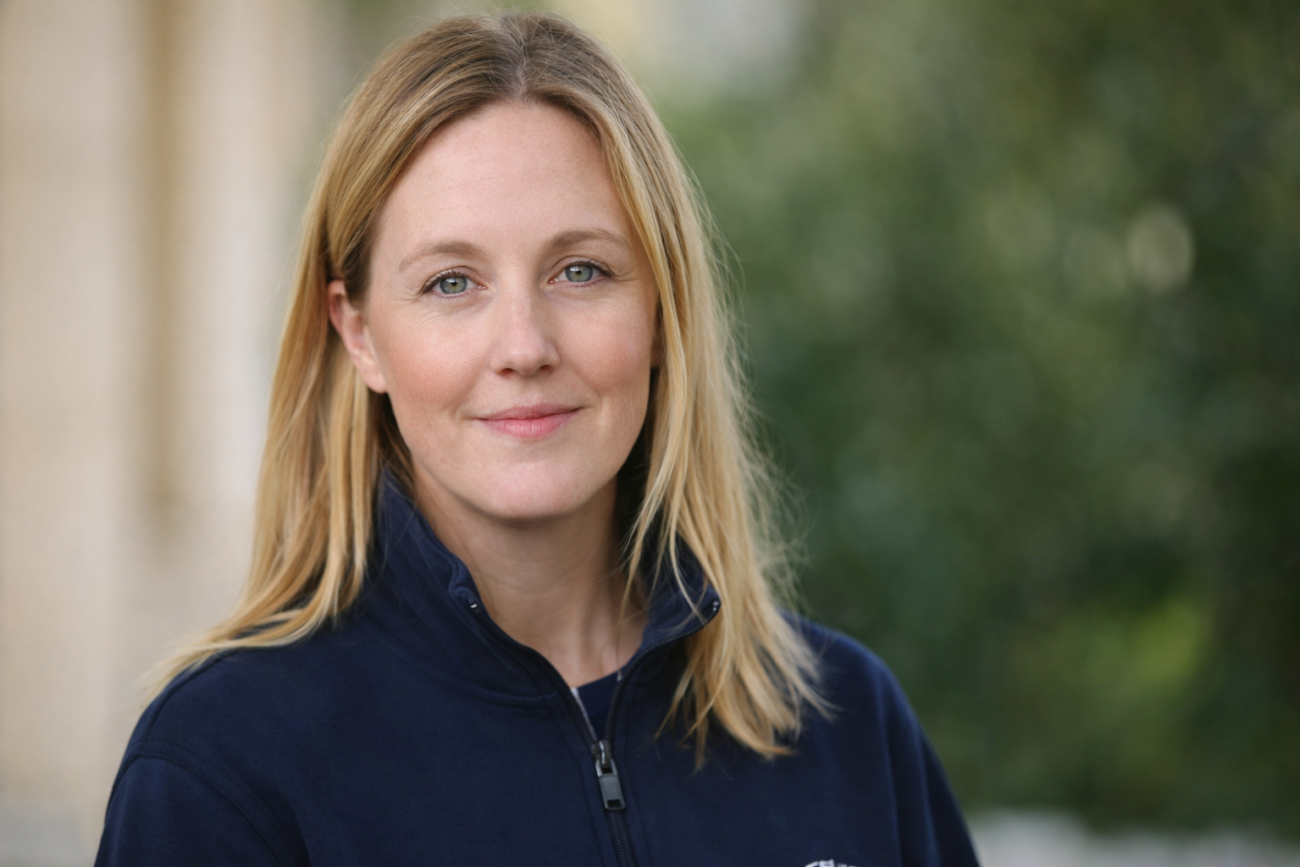
Felicity Tonkin has spent most of her life outside the spotlight, yet her name continues to surface in conversations about one of Britain’s most visible families. The reason is not fame earned through a public career, but a connection that became known through a highly personal and very public moment. In 1991, a DNA test confirmed that she was the daughter of Mark Phillips, the Olympic equestrian and former husband of Princess Anne. That revelation placed her, however loosely, on the outer edge of royal history.
What makes Tonkin’s story unusual is not simply who her father is, but how little else is firmly documented. Unlike many figures tied to the royal family, she has never stepped into a public role, never traded on her lineage, and has rarely been the subject of confirmed reporting beyond the original paternity case. Her biography, such as it exists, must be built carefully, separating verified fact from repeated assumption.
This is not a story of celebrity in the traditional sense. It is a story about proximity to fame, about privacy in the face of public curiosity, and about how a single moment can define how a person is remembered by those who have never met them.
Early Life and Family Background
Felicity Tonkin was born in August 1985 in New Zealand, the daughter of Heather Tonkin, an art teacher. Her early life unfolded far from the British press and far from the royal institutions that would later become loosely associated with her name. For several years, her existence remained largely private, known only within her immediate family and personal circles.
Her father, Mark Phillips, was already a public figure at the time of her birth. A decorated equestrian, he had won Olympic gold with the British team at the 1972 Munich Games and later added a team silver medal at the 1988 Seoul Olympics. He was also married to Princess Anne, the only daughter of Queen Elizabeth II, which made him a figure of both sporting and royal significance.
The connection between Phillips and Heather Tonkin reportedly stemmed from a brief encounter in New Zealand in 1984. At the time, Phillips’s marriage to Princess Anne was already under strain, though that reality was not yet widely understood by the public. Felicity’s birth the following year did not immediately trigger a public dispute, and for a time, her life remained entirely outside the public narrative.
The Paternity Case That Changed Everything
The turning point in Felicity Tonkin’s life came in 1991, when her mother sought legal recognition of Mark Phillips as her father. The claim moved the matter from private knowledge into public scrutiny, drawing attention from international media due to Phillips’s royal connections.
Contemporary reports describe Heather Tonkin pursuing acknowledgment that Phillips had fathered her daughter, prompting widespread interest and, in some cases, intense speculation. Buckingham Palace declined to comment on the matter, maintaining the royal family’s longstanding approach to personal controversies involving extended family members.
A DNA test conducted in 1991 confirmed that Mark Phillips was indeed Felicity’s biological father. That confirmation established her place in the broader narrative of Phillips’s life and, by extension, connected her to a family already under constant public attention.
The timing of the case added to its visibility. Princess Anne and Mark Phillips had already announced their separation in 1989, and their divorce would be finalized in April 1992. While the paternity revelation became part of the public conversation surrounding their marriage, it did not precede the separation, a detail that is often blurred in later retellings.
A Connection to the Royal Family—But at a Distance
Through her father, Felicity Tonkin is the half-sister of Peter Phillips and Zara Tindall, the two children of Princess Anne and Mark Phillips. This familial link is the primary reason her name continues to appear in royal-related searches and articles.
Yet the distinction between connection and inclusion is important. Felicity has never been part of the official royal family structure. She holds no title, performs no royal duties, and does not appear in official royal records or events. Her relationship to the monarchy is indirect, defined by biology rather than institution.
This separation has shaped how her story is told. While Peter and Zara grew up within the orbit of royal life, albeit without formal titles, Felicity’s upbringing remained rooted in New Zealand, far from the expectations and scrutiny that come with royal association.
That contrast has fueled ongoing curiosity. For many readers, the idea of a royal-adjacent figure living an ordinary life carries a certain intrigue, raising questions about identity, belonging, and the boundaries of public interest.
Life Away from Public Attention
After the events of 1991, Felicity Tonkin appears to have returned to a life largely shielded from media attention. There is little in the way of confirmed, detailed reporting about her education, early career, or personal milestones, a rarity in an age when even peripheral public figures are often extensively documented.
Several later accounts describe her as working in equine veterinary medicine in New Zealand, sometimes under the name Felicity Wade. This aligns with her father’s equestrian background and suggests a professional path connected to horses and animal care. Publicly indexed references to a Dr. Felicity Wade involved in equine health education support this general picture, though they do not explicitly confirm her identity as Tonkin.
What stands out is the consistency of this portrayal across multiple sources, even if the sources themselves are not always strong. The idea of Tonkin choosing a career centered on animals, rather than public life, fits the broader pattern of her apparent preference for privacy.
But here’s the thing: much of what is written about her life beyond the paternity case relies on repetition rather than direct evidence. Details about her marital status, children, and financial situation are often presented with confidence but without clear sourcing. A responsible account must acknowledge that gap.
Navigating Privacy in a Public Narrative
Felicity Tonkin’s story raises a question that extends beyond her own life: how much of a person’s private existence becomes public when they are connected to someone famous? In her case, the answer seems to be “less than many might expect.”
Unlike many individuals linked to high-profile families, Tonkin has not given interviews, built a public persona, or sought to clarify the details of her life in the media. Her absence from the public record appears to be deliberate, a choice that has shaped how she is perceived.
This absence has also created space for speculation. Online biographies often fill in the gaps with unverified claims, presenting them as established fact. The repetition of these claims can make them seem credible, even when their origins are unclear.
The truth is simpler and more restrained. Beyond the confirmed facts of her birth, parentage, and general location, much of Felicity Tonkin’s life remains her own. That is not a deficiency in the record, but a reflection of boundaries she appears to have maintained.
Public Image and Media Portrayal
In the years since the paternity case, Felicity Tonkin has been portrayed in two contrasting ways. On one hand, she is often described as a “secret daughter” or a hidden figure within a royal-adjacent story. On the other hand, she is presented as someone who has quietly built a life outside the spotlight.
These portrayals reveal more about media habits than about Tonkin herself. Stories connected to royalty tend to be framed in terms of drama and revelation, even when the underlying facts are limited. At the same time, there is a growing recognition that not every person linked to a famous family seeks or deserves ongoing scrutiny.
What’s surprising is how enduring her name has been in public discourse despite the lack of new information. Decades after the original story broke, she continues to be referenced in articles about Princess Anne, Mark Phillips, and their children.
This persistence speaks to the lasting interest in royal narratives, but it also highlights the gap between attention and substance. In Tonkin’s case, the attention has remained, while the substance has stayed largely unchanged.
Career, Income, and Net Worth
There is no confirmed public record detailing Felicity Tonkin’s income or financial standing. Estimates of her net worth appear in various online profiles, but these figures are not supported by credible financial disclosures or reporting.
If she is indeed working as an equine veterinarian, her income would likely reflect that profession rather than any connection to her father’s status. Veterinary work, particularly in specialized areas like equine care, can be financially stable but does not typically generate the kind of wealth often attributed to public figures.
Her financial independence, if that is the case, would align with the broader pattern of her life: grounded, private, and separate from the institutions that brought her name into public view.
Where Felicity Tonkin Is Now
As of 2026, Felicity Tonkin is believed to be living in New Zealand, continuing a life that remains largely out of public reach. There have been no confirmed reports of her participating in royal events or engaging in public-facing roles tied to her family background.
The limited information available suggests continuity rather than change. She appears to have maintained the same low profile that has defined her adult life, avoiding the visibility that often accompanies even distant connections to the royal family.
This consistency is, in itself, a defining feature of her story. While many individuals in similar positions eventually step into the public sphere, Tonkin’s path appears to have remained firmly private.
Frequently Asked Questions
Who is Felicity Tonkin?
Felicity Tonkin is the daughter of Mark Phillips, a British Olympic equestrian and former husband of Princess Anne, and Heather Tonkin, an art teacher from New Zealand. She became publicly known after a 1991 DNA test confirmed her paternity.
Is Felicity Tonkin related to the British royal family?
She is related by blood through her father to Peter Phillips and Zara Tindall, making her their half-sister. However, she is not a member of the royal family in any official sense and holds no title or role.
What does Felicity Tonkin do for a living?
She is widely reported to work in equine veterinary medicine in New Zealand, possibly under the name Felicity Wade. While this is consistent across multiple sources, detailed confirmation of her career remains limited.
Was Felicity Tonkin involved in Princess Anne’s divorce?
The timeline shows that Princess Anne and Mark Phillips separated in 1989, before the paternity confirmation became public in 1991. While the case became part of the public narrative, it did not precede the separation.
Is Felicity Tonkin married?
Her marital status has not been publicly confirmed. Some online sources claim she is married and has children, but these details are not supported by strong, verifiable evidence.
Why is Felicity Tonkin still searched online?
Her connection to a prominent royal-adjacent figure continues to generate interest, especially as readers look to understand the broader family dynamics of well-known public figures.
Conclusion
Felicity Tonkin’s story is defined as much by what is known as by what is not. A single confirmed event—her identification as Mark Phillips’s daughter—placed her in the public record, but it did not pull her into public life. That distinction has shaped how she is understood and how she has chosen to live.
Her biography resists the usual patterns of celebrity storytelling. There are no major public achievements to catalogue, no interviews to quote, and no official roles to trace. Instead, there is a life that appears to have unfolded quietly, away from the expectations tied to her father’s name.
The enduring interest in Felicity Tonkin says something about the public’s relationship with fame. People are drawn to the edges of well-known stories, looking for connections that add depth or intrigue. But not every connection leads to a visible narrative.
In Tonkin’s case, the most accurate portrait is also the simplest. She is a woman whose name became known through circumstance, who has maintained her privacy, and whose life continues largely beyond the reach of public documentation. That restraint, in a world eager for exposure, may be the most defining aspect of all.
