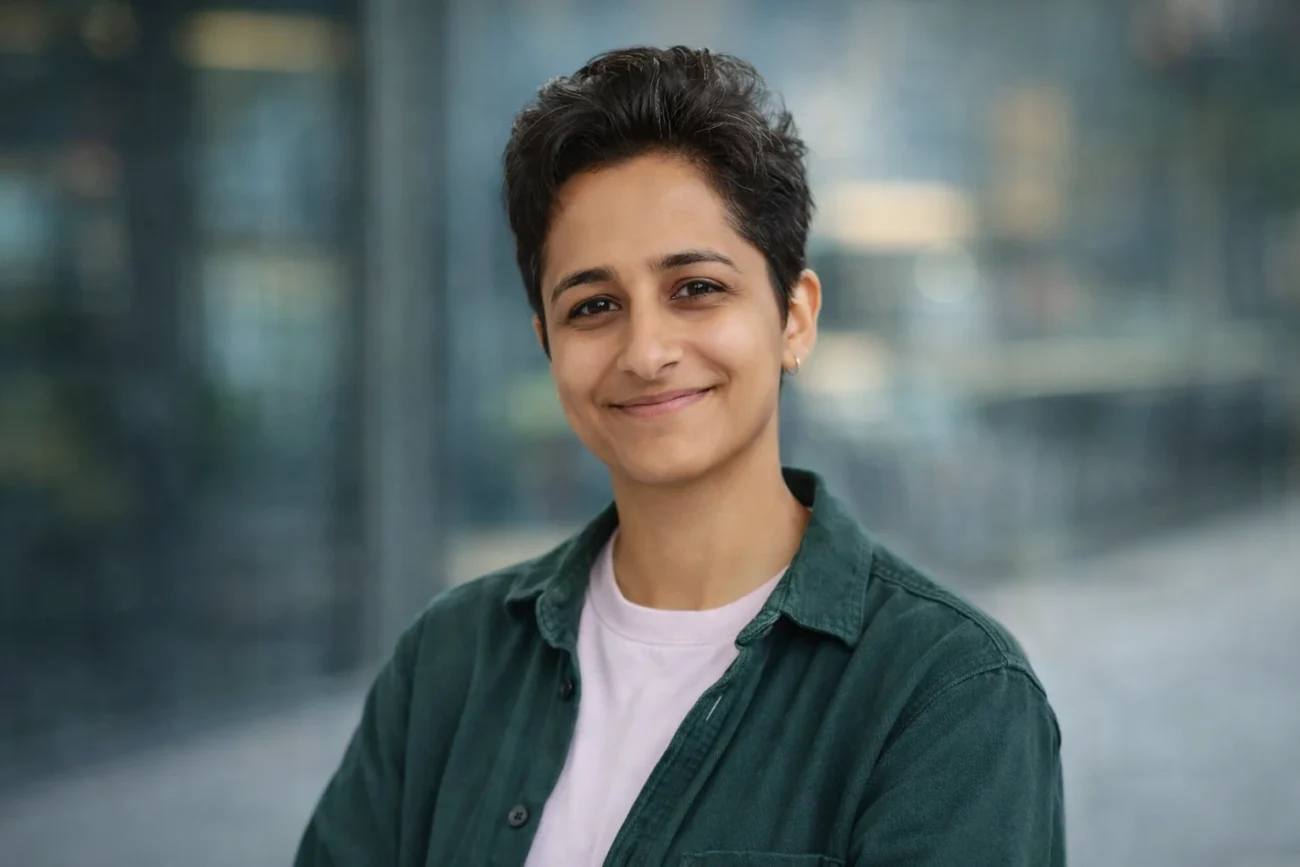
Shivani Dave has never fit neatly into a single category, and that is exactly why their name keeps surfacing across British media. You might encounter them hosting a radio show, debating gender policy on television, producing a podcast about queer history, or writing about tech platforms and online harm. Each of those roles looks distinct on the surface, but together they form a career shaped by communication—bridging gaps between science and the public, between marginalized communities and mainstream media, and between lived experience and national conversation.
To understand Shivani Dave is to understand a particular kind of modern public figure: one who moves between journalism, broadcasting, activism, and storytelling without fully belonging to any one lane. Their visibility has grown in recent years, not only because of media appearances but because of the way they engage with difficult, often polarizing issues. But behind that public presence is a longer, quieter story of education, persistence, and an evolving sense of purpose.
Early Life and Family
Shivani Dave was born and raised in the United Kingdom, growing up in a South Asian family that, like many immigrant households, placed a strong emphasis on education and professional stability. Publicly available information about their early family life remains limited, and Dave has not widely shared detailed accounts of their upbringing. What is known suggests a childhood shaped by both cultural expectation and curiosity about the world beyond it.
Their South Asian heritage has remained an important part of their identity, particularly in later work that addresses intersectionality within LGBTQ+ communities. Dave has spoken in various public contexts about the importance of representation for queer people of color, especially those navigating multiple layers of identity in environments that may not fully understand them. That awareness did not emerge overnight but appears rooted in early experiences of balancing cultural belonging with personal identity.
Growing up in Britain also meant navigating a society where conversations about race, gender, and sexuality were often uneven or incomplete. While there is no extensive public record of their childhood influences, the direction of Dave’s later work suggests an early sensitivity to questions of fairness, visibility, and voice. These themes would become central to their career, even if they were not fully articulated at the time.
Education and First Ambitions
Dave’s academic path offers one of the clearest windows into their early ambitions. They studied physics at the University of Nottingham, a choice that signals both intellectual curiosity and a willingness to engage with complex, technical subjects. Physics is not typically associated with media careers, but for Dave, it became a foundation rather than a detour.
During their university years, Dave developed an interest in how scientific ideas are communicated to the public. This shift led them to pursue a master’s degree in science media production at Imperial College London, a program designed to bridge the gap between scientific research and storytelling. The decision marked a turning point, moving them from pure science into a hybrid space where communication became the focus.
Not many people know this, but science media production is a demanding field that requires both technical understanding and narrative skill. Dave’s training would have involved translating complex concepts into accessible formats, working across audio and visual media, and learning how to engage audiences who may have little prior knowledge of the subject. That experience would later shape their approach to journalism, where clarity and accessibility remain central.
Entering the BBC and Building a Foundation
Shivani Dave’s early professional career began at the BBC, an institution that has long served as a training ground for journalists and broadcasters in the UK. They started at the BBC World Service, a global platform that reaches audiences far beyond Britain and demands a high level of editorial rigor. Working there exposed Dave to international perspectives and the challenges of communicating across cultural and linguistic boundaries.
From the World Service, Dave moved into other parts of the BBC, contributing to Radio 1, Radio 4, BBC Minute, and local radio stations. They also worked within the BBC’s science and news departments, drawing directly on their academic background. This period was crucial in shaping their skills as a producer, presenter, and storyteller.
The truth is, many media careers stall at this stage, with individuals struggling to move beyond junior roles. Dave, however, steadily built a portfolio that combined technical knowledge with on-air presence. Their work often focused on making science, health, and technology topics understandable to general audiences, a skill that remains in high demand.
What’s striking about this phase is its breadth. Rather than specializing narrowly, Dave worked across formats and topics, gaining experience in live broadcasting, recorded programming, and digital content. This versatility would later allow them to transition into freelance work with relative ease.
Expanding into Podcasting and Independent Media
After several years at the BBC, Dave began to expand their work beyond traditional broadcasting. One of the most significant projects from this period was The Log Books, a podcast that explores LGBTQ+ history through the archives of Switchboard, a UK-based helpline for queer people.
As a producer on the project, Dave helped shape a series that brought historical voices into contemporary conversation. The podcast used real call logs to reconstruct moments from queer life in Britain, offering insight into the fears, joys, and everyday realities of people who reached out for support. It was both historical and deeply human, avoiding sensationalism in favor of careful storytelling.
The Log Books received critical acclaim and won a Gold award for Best New Podcast at the British Podcast Awards in 2020. The success of the project highlighted Dave’s ability to work behind the scenes as well as in front of the microphone. It also reinforced their connection to LGBTQ+ storytelling, a thread that runs through much of their later work.
Here’s where it gets interesting. The podcast was not just a creative project but a form of community documentation, preserving voices that might otherwise have been forgotten. Dave’s involvement reflects a broader commitment to ensuring that marginalized histories are recorded and shared.
Public Identity and Coming Out
In 2020, Shivani Dave publicly came out as non-binary during a Pride special broadcast on BBC Radio Wiltshire. The moment was significant not only for Dave personally but also for listeners who rarely hear such disclosures in mainstream radio settings. Coming out on air meant placing their identity within a public, professional context, rather than treating it as something separate from their work.
Dave has since used they/them pronouns and has spoken about the ongoing nature of coming out. Rather than a single event, they describe it as a process that repeats across different environments and audiences. This perspective resonates with many LGBTQ+ people who navigate similar experiences in their own lives.
That said, Dave’s public identity has not been without challenges. As a visible non-binary person in media, they have been part of debates about gender, language, and representation. These discussions can be contentious, particularly in broadcast formats designed to provoke strong reactions.
But here’s the thing. Dave’s visibility also provides representation for audiences who may not see themselves reflected elsewhere. Their presence in mainstream media helps normalize conversations about gender diversity, even when those conversations are difficult.
Radio Hosting and Mainstream Visibility
Following their departure from the BBC in 2021, Dave moved into freelance work and took on new roles in radio and podcasting. They became associated with Virgin Radio Pride, a station dedicated to LGBTQ+ audiences, where they hosted programs and contributed to special broadcasts.
They also appeared on Pride Vibes, hosting Pride Breakfast, a show that blends music, conversation, and community engagement. These roles allowed Dave to connect directly with listeners in a more informal and personal way than traditional news broadcasting.
At the same time, Dave began appearing more frequently as a commentator on television, including on programs such as Good Morning Britain, Sky News, and TalkTV. These appearances often placed them in discussions about social policy, LGBTQ+ rights, and cultural debates.
The shift from radio host to TV commentator brought increased visibility but also greater scrutiny. Television debates can be intense, and participants are often expected to defend their positions in real time. Dave’s ability to articulate their views clearly under pressure has been a key factor in their continued presence in these spaces.
Activism and Community Organizing
Beyond media, Shivani Dave has been involved in community organizing, particularly within LGBTQ+ spaces in London. They have been linked to efforts to revive the London Dyke March, an event focused on lesbian and queer women’s visibility and activism.
Their work has also intersected with groups such as ACT UP London and London Trans+ Pride, both of which focus on advocacy and public demonstration. These connections highlight a commitment to activism that goes beyond commentary.
Not many people know this, but Dave has also performed as a drag king under the name Dishi Sumac. This aspect of their work reflects a creative engagement with gender and performance, adding another layer to their public identity.
Activism, for Dave, appears to be both personal and professional. It informs their journalism and broadcasting, while also grounding them in community networks that extend beyond media platforms.
Writing and Focus on Technology and Rights
In recent years, Dave’s writing has increasingly focused on the intersection of technology, human rights, and online culture. They have contributed to discussions about how social media platforms shape public discourse, particularly in relation to LGBTQ+ communities.
A 2025 article they wrote examined changes to Meta’s policies and the potential impact on queer users, arguing that platform decisions can influence the safety and visibility of marginalized groups. The piece reflected both personal experience and broader analysis, blending journalism with advocacy.
This shift toward tech-focused commentary aligns with Dave’s background in science and media. It also places them within a growing field of journalists who examine the social consequences of digital platforms.
The numbers tell a different story when it comes to online harm. Reports from organizations such as GLAAD and Amnesty International have documented the prevalence of abuse targeting LGBTQ+ individuals online. Dave’s work engages with these findings, translating them into accessible arguments for general audiences.
Public Image and Media Controversies
Shivani Dave’s public image is shaped by both their work and the debates they participate in. One widely discussed moment came in 2024 during a TalkTV appearance, where a dispute over pronouns became a focal point of the segment. The exchange drew significant attention online and highlighted ongoing tensions in media discussions about gender identity.
Incidents like this can overshadow other aspects of a person’s career, particularly when they are widely shared on social media. For Dave, the challenge has been maintaining a broader narrative that includes their journalism, activism, and creative work.
The truth is, controversy often amplifies visibility, but it does not define the entirety of a career. Dave’s continued work across multiple platforms suggests a resilience and commitment to their chosen fields.
Financial Profile and Net Worth
There is no publicly confirmed figure for Shivani Dave’s net worth, and any estimates should be treated with caution. As a freelance journalist and broadcaster, their income likely comes from a mix of presenting roles, writing commissions, consulting work, and media appearances.
Freelance media careers can vary widely in financial stability, depending on the number and type of projects undertaken. Dave’s involvement in multiple areas—radio, podcasting, television, and consulting—suggests a diversified income stream rather than reliance on a single source.
While they may not fit the profile of a high-earning celebrity broadcaster, their consistent presence across respected platforms indicates a sustainable and active career.
Where Shivani Dave Is Now
As of recent public information, Shivani Dave continues to work as a freelance journalist, broadcaster, and commentator. They remain active in podcasting, including their own project SHIVSCAMP, which explores personal and political themes through conversation and reflection.
They also continue to appear in media discussions about LGBTQ+ rights, technology, and social issues. Their work reflects an ongoing commitment to addressing topics that are both timely and complex.
What’s surprising is how consistently Dave has maintained a balance between different roles. They have not retreated into a single niche but continue to operate across journalism, broadcasting, and activism.
Frequently Asked Questions
Who is Shivani Dave?
Shivani Dave is a British journalist, broadcaster, and community organizer known for work across radio, podcasting, and television. They focus on topics including LGBTQ+ rights, science communication, and technology.
What is Shivani Dave’s gender identity?
Shivani Dave identifies as non-binary and uses they/them pronouns. They publicly came out in 2020 during a radio broadcast.
What is Shivani Dave known for?
Dave is known for broadcasting work with the BBC and Virgin Radio Pride, producing the podcast The Log Books, and appearing as a commentator on television discussions about social issues.
What did Shivani Dave study?
They studied physics at the University of Nottingham and later completed a master’s degree in science media production at Imperial College London.
Is Shivani Dave involved in activism?
Yes, Dave has been involved in LGBTQ+ activism, including organizing events such as the London Dyke March and working with advocacy groups.
What is Shivani Dave doing now?
They continue to work as a freelance journalist and broadcaster, host podcasts, and contribute to discussions about technology, media, and LGBTQ+ rights.
Conclusion
Shivani Dave’s career reflects a broader shift in how public figures operate in the media. They are not confined to a single platform or role but move between journalism, broadcasting, and activism with ease. That flexibility has allowed them to stay relevant in a rapidly changing media environment.
Their background in science gives them a distinctive voice, particularly when discussing technology and public policy. At the same time, their lived experience informs their approach to storytelling and advocacy.
What stands out most is the consistency of purpose across different projects. Whether producing a podcast, hosting a radio show, or debating on television, Dave returns to the same core concerns: communication, representation, and fairness.
As media continues to evolve, figures like Shivani Dave are likely to become more common. But for now, they remain a clear example of how one person can bridge multiple worlds and bring those conversations into the public eye.
