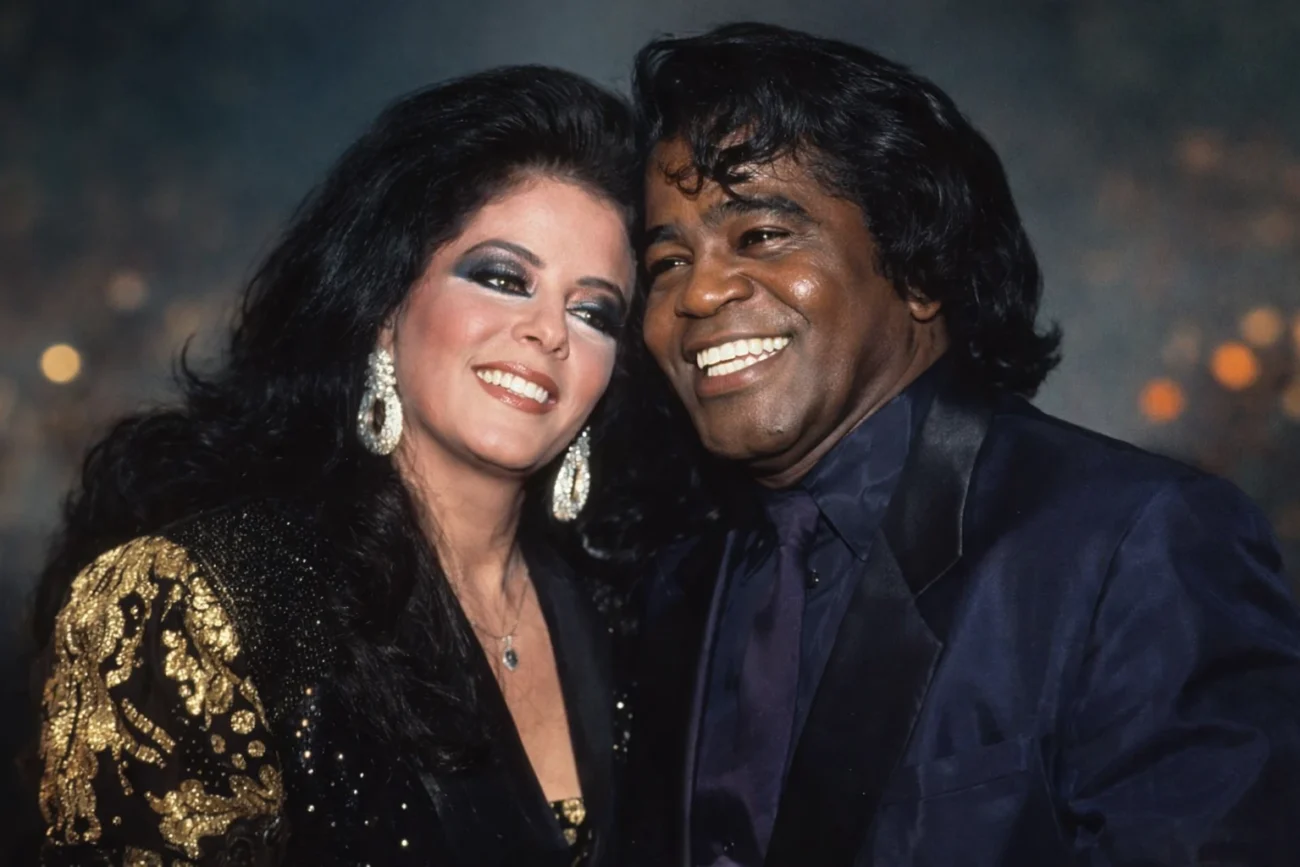
On January 6, 1996, Adrienne Rodriguez—known publicly at the time as Adrienne Brown—collapsed while recovering from cosmetic surgery in Beverly Hills. Within hours, the story was reduced to headlines: “James Brown’s wife dies,” followed by a swirl of speculation, grief, and confusion. The official cause would later be ruled accidental. But the woman at the center of the story remained, even then, only partially understood.
Nearly three decades later, Adrienne Rodriguez exists in public memory in fragments. She is often described first and last as the third wife of James Brown, the “Godfather of Soul.” Yet the deeper truth is more complicated. She lived a life that intersected with fame, violence, and the entertainment industry, while much of her own identity has been obscured by conflicting reports and thin documentation.
This biography is an attempt to reconstruct what can be known, separate what is confirmed from what is assumed, and place Adrienne Rodriguez in the clearest historical context possible.
Early Life and Background
Reliable details about Adrienne Rodriguez’s early life are limited, and that absence is one of the defining challenges in writing about her. Unlike many public figures, she did not leave behind a large body of interviews, official biographies, or widely cited records that map her upbringing in detail. What exists comes largely from contemporaneous reporting at the time of her death and scattered references in entertainment databases.
Some reports identify her as Adrienne Lois Rodriguez, though even basic information such as her exact birth date or place of birth has been inconsistently reported. Estimates of her age at death vary, with some outlets listing her as 45 and others as 47. That kind of discrepancy may seem minor, but it reflects a broader issue: her life before public attention remains only lightly documented in reliable sources.
What is more consistent is the sense that she entered the entertainment world not as a performer, but through behind-the-scenes work. She was described in Associated Press reporting as a hairstylist who worked on television productions. That detail, though brief, offers a glimpse into a professional identity that predates her marriage to one of the most famous musicians in American history.
Work in Television and Entertainment
Adrienne Rodriguez’s professional life is often misrepresented in modern online profiles, many of which portray her as a singer or musician. The strongest available reporting does not support that characterization. Instead, contemporaneous sources describe her as a hairstylist who worked on shows such as Days of Our Lives and Solid Gold, both well-known television productions of their time.
This distinction matters because it places her within the entertainment industry in a practical, working capacity rather than as a public performer. Hairstylists on major productions play a key role in shaping on-screen presentation, but they rarely receive widespread recognition. In Rodriguez’s case, that kind of work positioned her close to fame without making her famous in her own right.
There are also limited records linking her to media projects connected to James Brown. Listings in film and television databases suggest she may have been involved in productions related to Brown’s career, including documentaries or television specials. These credits are sparse and not extensively detailed, but they reinforce the idea that she had some professional engagement beyond her role as a spouse.
What’s striking is how quickly that more grounded picture has been replaced online by broader claims. Many modern biographies describe a music career that is not well supported by primary sources. The truth is simpler and, in some ways, more revealing: Rodriguez was part of the entertainment world, but not in the way popular retellings often suggest.
Meeting James Brown
Adrienne Rodriguez entered the public spotlight through her relationship with James Brown, one of the most influential musicians of the 20th century. The exact details of how they met are not consistently documented, but their relationship became public in the early 1980s, a period when Brown was still a dominant figure in music, though facing personal and legal challenges.
They married in 1984, making Rodriguez his third wife. By that point, Brown had already built a legendary career, with a reputation that combined extraordinary artistic influence with a volatile personal life. Rodriguez stepped into that world not as a public figure but as a private individual whose life would soon become entangled with Brown’s fame.
The marriage quickly drew attention, not only because of Brown’s celebrity status but also because of the instability that would come to define their relationship. Public records from the late 1980s onward show a pattern of incidents that brought the couple into the news repeatedly.
A Marriage Marked by Conflict
Adrienne Rodriguez’s marriage to James Brown was widely described at the time as turbulent. That description is not based on rumor alone; it is supported by police reports, court records, and contemporaneous news coverage.
One of the most widely reported incidents occurred in 1988, when Brown surrendered to authorities after Rodriguez accused him of assault. According to reports, she said he had beaten her and fired a gun at her vehicle. Brown denied the allegations, and his legal team contested the charges. The case became part of a larger series of legal troubles that Brown faced during that period.
The pattern did not end there. In 1994, Brown was again charged with domestic violence following an altercation with Rodriguez. Reports from the time described an argument that escalated into physical confrontation. As in earlier incidents, the situation drew media attention and reinforced the perception of a deeply troubled relationship.
Accounts from advocates and later reporting suggest that Rodriguez sought medical attention following at least one alleged assault in the mid-1990s. These accounts, while not all part of formal legal proceedings, align with the broader pattern documented in public records. The marriage was not defined by a single episode but by recurring cycles of conflict, reconciliation, and renewed tension.
That history is essential to understanding Rodriguez’s life. It places her not only within the orbit of a famous figure but also within a personal environment that was repeatedly described as volatile and, at times, dangerous.
Public Image and Private Reality
For much of her marriage, Adrienne Rodriguez was known primarily through her association with James Brown. Media coverage often framed her as “the singer’s wife,” a label that left little room for her own identity. At the same time, the incidents that brought her into the news were often tied to conflict rather than achievement.
This imbalance shaped how she was perceived. On one hand, she was part of a high-profile marriage that attracted attention. On the other, she was not given the kind of platform that allows a public figure to define themselves. As a result, her story has often been told in relation to Brown rather than on its own terms.
The truth is that Rodriguez lived in a space between visibility and obscurity. She was close enough to fame to be recognized, but not positioned to control how her life was represented. That dynamic has continued after her death, with many accounts reducing her to a supporting role in Brown’s story.
The Final Days and Death
Adrienne Rodriguez died on January 6, 1996, at a Beverly Hills after-care facility. She had recently undergone cosmetic surgery, and early reports indicated that she collapsed while recovering from the procedure. At the time, authorities stated that there was no immediate evidence of foul play.
The official cause of death was later determined to be accidental. The Los Angeles County coroner concluded that a combination of heart disease and drug use contributed to her death, with her weakened condition following surgery also playing a role. Toxicology reports identified the presence of several substances, including PCP, as well as prescription medications.
This official ruling has remained in place. However, the circumstances surrounding her death have continued to attract attention. Years later, investigative reporting revisited the case and raised questions about whether all aspects had been fully explored. Those inquiries did not lead to a change in the official findings, but they did add another layer of complexity to her story.
What remains clear is that her death occurred at a moment when her life was still deeply connected to Brown’s, both personally and legally. At the time of her passing, some of the legal issues stemming from their relationship had not been fully resolved.
Life After Death: Memory and Misrepresentation
In the years since her death, Adrienne Rodriguez’s story has been reshaped by a combination of limited information and widespread online repetition. Many modern biographies present detailed accounts of her life that are not supported by strong evidence. These include claims about her career, her family, and her personal achievements.
One of the most common examples involves the question of children. Some sources assert that she and James Brown had children together, often naming individuals who are part of Brown’s broader family but not clearly identified as Rodriguez’s children in reliable records. This kind of confusion reflects the difficulty of reconstructing her life from incomplete data.
The same pattern appears in descriptions of her profession. While early reporting identified her as a hairstylist, later accounts have expanded that into a full-fledged music career without clear documentation. Over time, these repeated claims have created a version of Rodriguez that feels more complete than the available evidence actually supports.
This process is not unique to her, but it is especially visible in her case. When a person’s life is not extensively documented, gaps are often filled by assumption. Once those assumptions are repeated enough times, they begin to take on the appearance of fact.
Relationship to James Brown’s Legacy
Adrienne Rodriguez’s life is inseparable from the legacy of James Brown, and that connection continues to shape how she is remembered. Brown’s influence on music is widely acknowledged, but his personal life has been the subject of increasing scrutiny, particularly in recent years.
Documentaries and retrospective reporting have revisited allegations of domestic violence and explored how those incidents fit into the broader narrative of his life. In that context, Rodriguez is one of several women whose experiences have been examined as part of a more complete understanding of Brown’s history.
Her story contributes to that larger conversation. It highlights the tension between public admiration for an artist and the private realities that may exist behind the scenes. It also raises questions about how society remembers individuals who are connected to powerful figures but do not have the same platform to tell their own stories.
Where Adrienne Rodriguez Fits in History
Adrienne Rodriguez is not a widely documented public figure in the traditional sense. She did not build a career that placed her at the center of public attention, nor did she leave behind a large body of work that defines her legacy independently.
Yet her life still matters, both as an individual story and as part of a broader historical context. She represents a category of people who are drawn into public view through their relationships, often without the ability to control how they are portrayed.
Her story also serves as a reminder of how easily personal histories can be simplified or distorted. The truth of her life is neither as complete nor as neatly packaged as many online profiles suggest. It exists in a series of documented moments, each of which offers a partial view of who she was.
Frequently Asked Questions
Who was Adrienne Rodriguez?
Adrienne Rodriguez was the third wife of musician James Brown. She was known publicly during their marriage as Adrienne Brown and was described in contemporaneous reporting as a hairstylist who worked in television. Her life became widely known because of her relationship with Brown and the events surrounding her death in 1996.
What did Adrienne Rodriguez do for a living?
Reliable sources identify her as a hairstylist who worked on television productions such as Days of Our Lives and Solid Gold. While some modern accounts describe her as a singer or musician, those claims are not strongly supported by primary reporting. There is limited evidence of her involvement in media projects connected to James Brown.
When did Adrienne Rodriguez die?
She died on January 6, 1996, in Beverly Hills, California. Her death occurred while she was recovering from cosmetic surgery at an after-care facility. The official cause was ruled accidental by the Los Angeles County coroner.
What was the cause of her death?
The coroner determined that her death resulted from a combination of heart disease and drug use, with her weakened condition after surgery also contributing. Toxicology reports identified multiple substances in her system. Although questions have been raised in later years, the official ruling has not been changed.
Did Adrienne Rodriguez have children with James Brown?
Public records on this question are inconsistent. Some sources claim that the couple had children together, but these claims are not clearly supported by reliable documentation. Names often cited in this context are associated with James Brown’s broader family rather than definitively with Rodriguez.
What was her relationship with James Brown like?
Their marriage was widely described as turbulent and was marked by multiple incidents of alleged domestic violence. These incidents were documented in police reports and news coverage during the 1980s and 1990s. The relationship was characterized by repeated cycles of conflict and reconciliation.
Conclusion
Adrienne Rodriguez’s life does not fit neatly into the categories often used to describe public figures. She was neither fully private nor fully public, neither widely documented nor entirely unknown. Her story exists in the space between those extremes, shaped by the intersection of personal experience and public attention.
What stands out is not just the events of her life, but the way they have been remembered. The gaps in her biography have allowed speculation to take hold, creating a version of her that feels more certain than the evidence allows. That gap between record and retelling is part of her legacy.
At the same time, her life offers a clear reminder of the human realities that can exist behind fame. She was part of a relationship that brought both visibility and hardship, and her experiences continue to be relevant in discussions about power, accountability, and memory.
Adrienne Rodriguez may never be as fully documented as more prominent figures. But the effort to understand her, carefully and honestly, remains worthwhile. It is a way of recognizing a life that has too often been reduced to a footnote and restoring some measure of clarity to a story that still matters.
