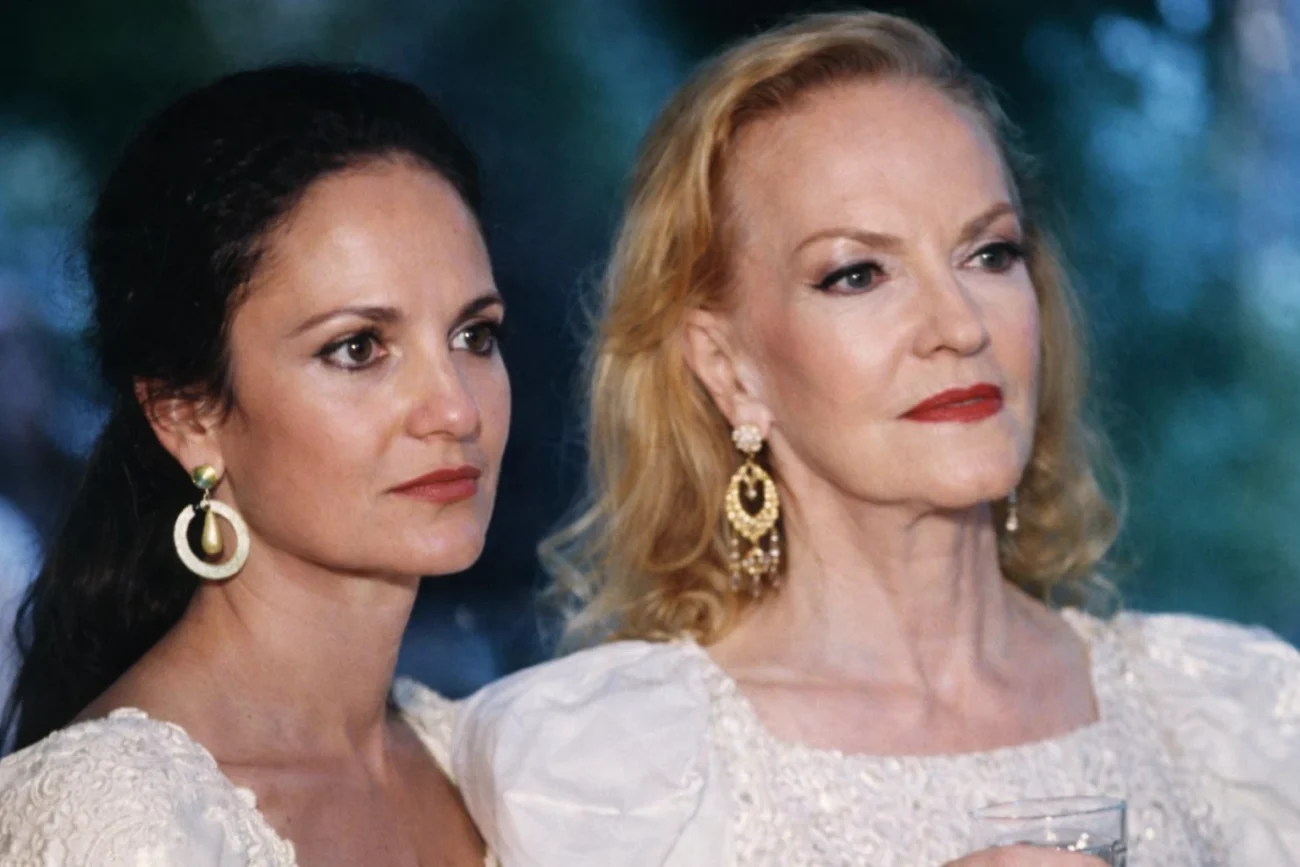
In December 1995, after two years of legal tension and media fascination, Charlene Gail Heffner walked away from one of America’s most closely watched estate disputes with a reported $65 million settlement. For many, that moment defined her. It cast her as the adopted daughter of tobacco heiress Doris Duke who challenged her exclusion from a vast fortune and forced a resolution. But the settlement, large as it was, tells only part of the story. The truth is more complicated, shaped by a relationship that blurred emotional bonds, legal definitions, and public perception.
Charlene Gail Heffner—better known to the public as Chandi Heffner or Chandi Duke Heffner—did not set out to become a figure of national curiosity. Her name entered headlines because of her connection to wealth and power, yet much of her life remains unusually private for someone tied to such a high-profile saga. That tension between visibility and silence is what makes her story endure.
Early Life and Family Background
Reliable details about Charlene Gail Heffner’s early life are limited, and that scarcity itself is part of her story. Unlike celebrities or public officials, she did not grow up in the spotlight, and there is no extensive archival record of her childhood, schooling, or family life in major newspapers or official biographies. Various online profiles claim specific birth dates and hometowns, but many of these are repeated across sites without clear sourcing, making them difficult to verify.
What can be said with confidence is that she was an adult by the time she met Doris Duke in the 1980s. That fact matters because it frames everything that followed. Her relationship with Duke was not built on a traditional parent-child upbringing but developed later, in a context shaped by personal connection, spiritual belief, and the immense influence of Duke’s wealth.
Some accounts suggest Heffner had interests in spirituality and alternative belief systems, which may have played a role in her connection with Duke. These details appear in magazine reporting and later retellings, though they should be treated as part of the narrative surrounding the relationship rather than as fully documented biography. The absence of a clear, widely accepted early-life record leaves room for interpretation, but it also reinforces how much of her identity became defined by events that occurred later.
Meeting Doris Duke and the Adoption
Charlene Gail Heffner’s life changed dramatically in 1988, when Doris Duke legally adopted her as an adult. The adoption itself was unusual enough to attract attention, even before the later fallout. Duke, born in 1912, was one of the richest women in America, having inherited a fortune from her father, industrialist James Buchanan Duke. By the late 20th century, she was known both for her philanthropy and her eccentric personal life.
The relationship between Duke and Heffner has been described in different ways, depending on the source. Some accounts portray Duke as deeply attached to Heffner, while others suggest the bond was shaped by spiritual beliefs, including the idea—circulated in later reporting—that Heffner might have represented a connection to Duke’s deceased infant daughter, Arden. These claims are widely repeated but not definitively proven, and they sit at the edge of documented fact and interpretive storytelling.
What is certain is that the adoption gave Heffner legal standing as Duke’s daughter. In practical terms, that positioned her within Duke’s personal and potentially financial world in a way that few others could claim. At least for a time, it appeared that she might play a significant role in Duke’s future plans.
A Relationship Under Strain
The closeness between Doris Duke and Charlene Gail Heffner did not last. By the early 1990s, their relationship had deteriorated, though the exact reasons remain unclear in the public record. Contemporary reporting confirms that the two had a falling out before Duke’s death in October 1993, but it does not offer a single, uncontested explanation.
This period of estrangement coincided with increasing attention on Duke’s inner circle. Bernard Lafferty, Duke’s butler, became a central figure, eventually serving as co-executor of her estate. His influence, along with questions about Duke’s health and decision-making in her final years, added layers of complexity to an already tense situation.
Here’s where the story becomes less about personal disagreement and more about competing narratives. Some observers believed Heffner had been unfairly pushed aside, while others suggested Duke had reasons to distance herself. Without clear, authoritative accounts from both parties, the truth remains fragmented. What is beyond dispute is that the relationship ended in a way that had lasting legal and financial consequences.
Doris Duke’s Death and the Will
When Doris Duke died on October 28, 1993, the contents of her will surprised many who had followed her life. Despite the earlier adoption, Charlene Gail Heffner was not included as a primary beneficiary. Instead, Duke directed much of her fortune—estimated at around $1.2 billion—toward charitable foundations and institutions.
The exclusion of Heffner raised immediate questions. As Duke’s legally adopted daughter, she might have been expected to inherit a significant portion of the estate. Her absence from the will suggested a deliberate decision, one that reflected the breakdown of their relationship but also opened the door to legal challenge.
Public reaction to the will was swift. The idea that an adopted daughter could be left out of such a massive estate struck many as both unusual and controversial. It also set the stage for a legal battle that would draw national attention and shape Heffner’s public identity for years to come.
The Legal Battle and Settlement
Following Duke’s death, Charlene Gail Heffner moved to challenge the will and assert her claims. The dispute was not limited to inheritance alone. She also pursued a breach-of-contract claim, arguing that Duke had promised to support her financially for life. This added another dimension to the case, suggesting that their relationship involved expectations that extended beyond formal adoption.
The legal proceedings unfolded over two years, during which the case attracted significant media coverage. Questions about Duke’s mental state, the influence of those around her, and the validity of her final decisions became central themes. The case also highlighted the complexities of estate law, particularly when it intersects with personal relationships and large sums of money.
In December 1995, the dispute reached a resolution. Heffner agreed to drop her claims in exchange for a reported $65 million settlement. While substantial, the amount represented only a fraction of Duke’s overall estate. The settlement allowed both sides to avoid prolonged litigation, but it did not fully resolve the questions that had fueled public interest.
The outcome left Heffner in a unique position. She had secured a significant financial settlement, yet she was not recognized as the principal heir. The distinction is important because it shaped how she was perceived in the years that followed.
Life After the Settlement
After the legal battle concluded, Charlene Gail Heffner largely stepped away from public view. Unlike many individuals connected to high-profile disputes, she did not pursue a media career or maintain a strong public presence. Instead, she appears to have chosen a quieter path, focusing on personal and charitable endeavors.
Some publicly available materials suggest that she became involved in philanthropic work, particularly through organizations linked to healthcare and animal welfare. References to the CDH International Foundation indicate involvement in providing medical services to underserved communities, especially in India. These descriptions come primarily from self-published or organizational sources, which offer insight into her activities but should be understood within that context.
What’s surprising is how little verified information exists about her day-to-day life after the 1990s. There are no widely reported interviews, major public appearances, or detailed financial disclosures. This level of privacy is unusual for someone who once stood at the center of a widely covered legal drama.
Public Image and Media Portrayal
Charlene Gail Heffner’s public image has been shaped less by her own statements and more by how others have written about her. Magazine features, news reports, and later online biographies have constructed a portrait that blends fact with interpretation. Depending on the source, she has been described as a spiritual figure, a wronged daughter, or a controversial presence in Duke’s life.
The truth is that these portrayals often say as much about public fascination as they do about Heffner herself. Stories involving immense wealth tend to attract speculation, and the absence of direct commentary from Heffner has allowed multiple narratives to take hold. Some are grounded in documented events, while others rely on inference or repetition.
This dynamic has contributed to ongoing confusion about her identity. Even her name varies across sources, with Charlene Gail Heffner, Chandi Heffner, and Chandi Duke Heffner all appearing in different contexts. For readers, sorting through these variations requires attention to the underlying facts rather than the labels used.
Financial Standing and Net Worth
Estimating Charlene Gail Heffner’s net worth is difficult, and many figures circulating online should be approached with caution. The most reliable financial benchmark is the $65 million settlement she received in 1995. Beyond that, there is little publicly confirmed information about her investments, income, or current assets.
Some websites offer specific net worth estimates, but these are rarely supported by verifiable data. Without access to financial disclosures or credible reporting, such figures remain speculative. What can be said is that the settlement would have provided substantial financial security, especially if managed carefully over time.
It is also worth noting that Heffner did not gain control of Doris Duke’s estate or foundations. Those remained structured around Duke’s philanthropic intentions, limiting Heffner’s direct influence over the broader fortune. This distinction often gets lost in simplified retellings of the story.
Where Charlene Gail Heffner Is Now
Charlene Gail Heffner’s current life remains largely out of the public eye. Available information suggests she has maintained a low profile, with occasional references to residence in Hawaii and involvement in charitable work. These details come primarily from self-reported sources and organizational materials, which provide a glimpse but not a complete picture.
The absence of recent, independent reporting reflects both her privacy and the passage of time. The events that made her famous occurred more than three decades ago, and public interest has gradually shifted elsewhere. Still, her name continues to appear in searches and discussions, a reminder of how enduring certain stories can be.
What stands out is her apparent choice to step away from the spotlight. After a period of intense scrutiny, she did not seek to extend her public presence. That decision has shaped how her story is remembered, leaving key aspects of her life known only in outline.
Frequently Asked Questions
Who is Charlene Gail Heffner?
Charlene Gail Heffner is best known as the woman adopted as an adult by Doris Duke in 1988. She later became involved in a high-profile legal dispute over Duke’s estate and reached a settlement in 1995.
Is Charlene Gail Heffner the same as Chandi Heffner?
Yes, Charlene Gail Heffner is also known as Chandi Heffner or Chandi Duke Heffner. The different names appear in various public records and media reports, but they refer to the same individual.
Did Charlene Gail Heffner inherit Doris Duke’s fortune?
No, she did not inherit the full estate. She challenged her exclusion from Duke’s will and settled her claims for a reported $65 million, which was only a portion of the overall fortune.
Why did Doris Duke adopt Charlene Gail Heffner?
The exact reasons are not fully documented. Some accounts suggest a close personal bond and shared beliefs, while others point to more complex motivations. The lack of definitive evidence means the full explanation remains uncertain.
What is known about her life today?
Public information about her current life is limited. She is believed to have been involved in charitable work and to have maintained a private lifestyle, but detailed, independently verified updates are scarce.
What made her case so widely discussed?
The combination of a massive estate, an adult adoption, and a legal dispute created a story that captured public attention. It raised questions about family, inheritance, and influence that continue to resonate.
Conclusion
Charlene Gail Heffner’s life is a study in contrasts. She moved from relative obscurity into one of the most public inheritance disputes of the late 20th century, only to return to a largely private existence afterward. Her story is not defined by a single role but by the tension between personal connection and public scrutiny.
The events surrounding Doris Duke’s estate ensured that her name would be remembered, yet they also obscured much of who she is beyond that chapter. The legal battle provided answers in financial terms, but it left many personal questions unresolved. That ambiguity has allowed her story to endure, even as the details remain incomplete.
What remains clear is that Charlene Gail Heffner’s life cannot be reduced to a headline or a settlement figure. It reflects the unpredictable ways in which private relationships intersect with public attention, especially when extraordinary wealth is involved. For readers, her story offers not just information, but a reminder of how complex and human such stories can be.
