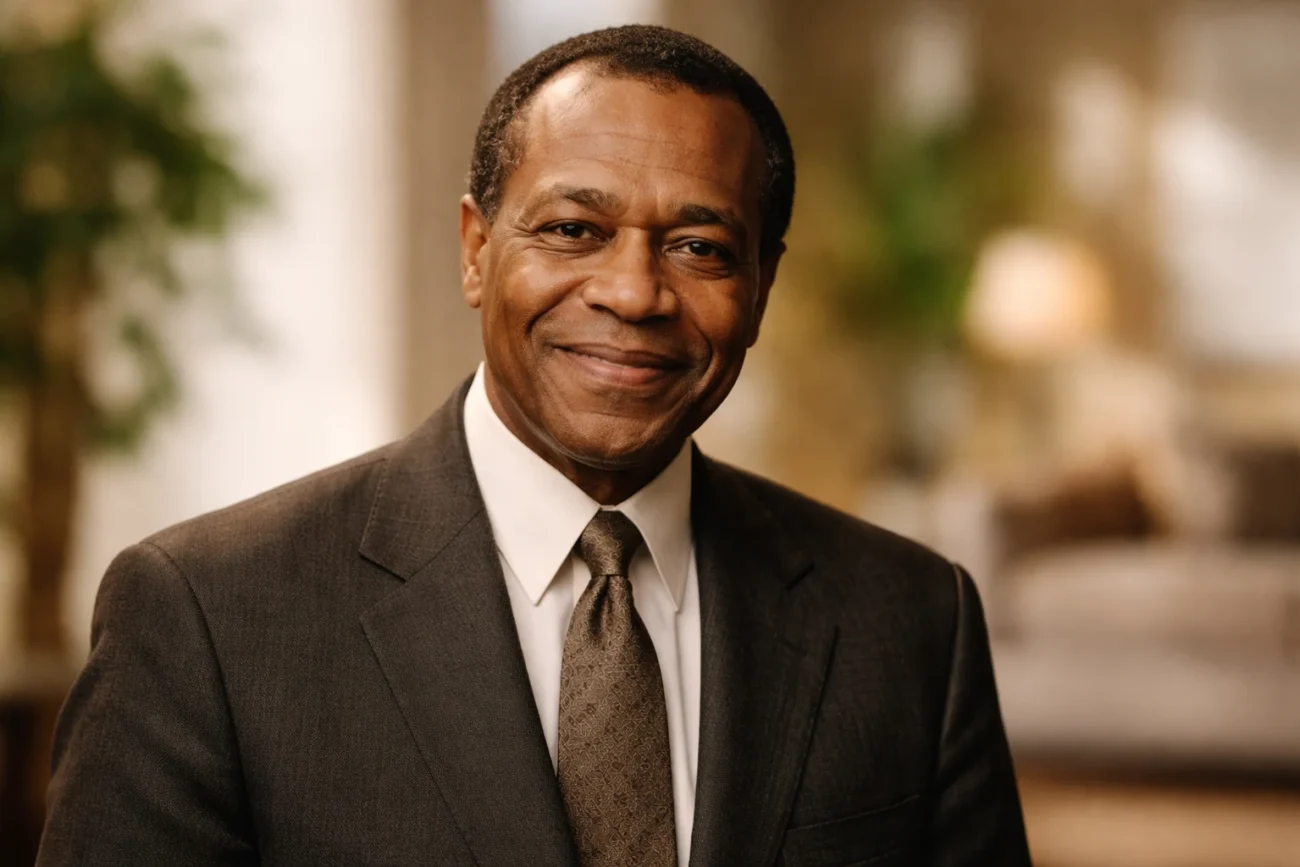
Charles Anthony Vandross lived most of his life outside the public spotlight, yet his name continues to surface for one simple reason: he was the older brother of Luther Vandross, one of the most celebrated voices in modern R&B. For many readers, that connection is the starting point. But Charles’s story, while less documented, sits within a family narrative marked by talent, loss, and a deeply rooted connection to music that shaped an era.
Unlike his younger brother, whose career unfolded on stages around the world, Charles Anthony Vandross remains a quieter figure in the historical record. The available details about his life are limited, but they are enough to sketch a portrait of a man who grew up in a culturally rich household in New York City, shared formative years with a future music legend, and belonged to a family whose influence extended far beyond what public archives can fully capture.
Early Life and Family
Charles Anthony Vandross was born on February 7, 1947, in Manhattan, New York. He was the third of four children born to Luther Vandross Sr. and Mary Ida Shields Vandross. His father worked as an upholsterer and was also known to sing, while his mother was a nurse whose discipline and devotion helped hold the family together through both stability and hardship.
The Vandross household was not a celebrity environment in the traditional sense, but it was steeped in music. Charles grew up alongside his sisters Patricia and Ann, and his younger brother Luther, who would go on to become a defining voice in soul and R&B. The family lived in Manhattan before later spending time in the Bronx, a setting that exposed the children to a wide range of musical influences, from gospel to pop to jazz.
Tragedy struck early in Charles’s life. His father died in 1959 when Charles was just 12 years old, leaving Mary Ida to raise four children on her own. That loss shaped the family dynamic in lasting ways. For Charles and his siblings, it meant growing up quickly and relying heavily on one another, creating bonds that would remain central even as their paths diverged.
Growing Up in a Musical Household
Music was not simply entertainment in the Vandross home; it was part of daily life. Mary Ida Vandross was known for her deep appreciation of music, and she made sure her children were surrounded by it. Records by artists such as Aretha Franklin and Dionne Warwick played frequently, and the children absorbed those sounds naturally.
Luther Vandross would later speak about these early influences, describing a childhood where music was always present. While those recollections often center on Luther’s development, they also reflect the environment Charles experienced. Growing up in that atmosphere meant being part of a household where rhythm, melody, and performance were constant companions.
Not many people know this, but the Vandross children each responded to that environment differently. Luther gravitated toward performance and songwriting, while Charles’s role was less publicly defined. There is no widely confirmed record of Charles pursuing a professional music career, though it is reasonable to assume he shared in the same early exposure that shaped his younger brother’s ambitions.
Relationship with Luther Vandross
Charles Anthony Vandross’s relationship with Luther was, by all available accounts, rooted in typical sibling dynamics shaped by shared circumstances. As an older brother, Charles would have witnessed Luther’s early fascination with music and his eventual steps into performance during adolescence.
Luther’s early career began with group singing, including his involvement with Listen My Brother, a vocal ensemble that appeared on early episodes of Sesame Street in the late 1960s and early 1970s. While Luther’s participation in these projects is well documented, there is no clear evidence that Charles was part of these performances. Some online sources suggest otherwise, but those claims are not supported by primary or widely recognized records.
That said, growing up alongside a rising talent would have influenced family life in subtle ways. Charles was present during the years when Luther was discovering his voice, building confidence, and taking the first steps toward a professional career. Even if Charles did not pursue music publicly, he was part of the family structure that supported those early developments.
Adult Life and Limited Public Record
One of the defining aspects of Charles Anthony Vandross’s biography is how little of it exists in the public domain. Unlike his brother, whose career was documented through interviews, recordings, and performances, Charles lived largely outside media coverage. This absence of information has led to speculation, but careful research shows that verifiable facts remain scarce.
There is no confirmed public record detailing Charles’s professional career, educational background, or personal ambitions in the way that typically accompanies public figures. This does not mean his life lacked direction or purpose; rather, it suggests he chose, or naturally fell into, a more private path.
Here’s where it gets interesting. In an era before constant digital documentation, many lives—especially those not tied to public careers—left only minimal archival traces. Charles’s life reflects that reality. He belonged to a generation where privacy was the norm, and not every family member of a famous person became a subject of public curiosity during their lifetime.
Personal Life and Family Connections
Details about Charles Anthony Vandross’s personal life are limited and should be approached with care. Some secondary sources suggest that he may have had children, including a daughter, but the available documentation is not consistent enough to confirm those claims with certainty.
What is clear is that Charles remained part of a close-knit family. The Vandross siblings maintained connections through shared history, even as Luther’s career grew and brought increasing attention to the family name. Mary Ida Vandross, in particular, remained a central figure in holding the family together through decades of change and loss.
The truth is, much of Charles’s personal life remains private by today’s standards. That absence of detail can feel frustrating for readers seeking a complete biography, but it also reflects a life lived outside the expectations of public scrutiny.
Death and Family Loss
Charles Anthony Vandross died on April 30, 1991, in New York at the age of 44. The cause of his death has not been widely documented in reliable public sources, and it is important not to speculate beyond what is confirmed.
His death came during a period when the Vandross family had already experienced significant loss. Their father had died decades earlier, and in the years that followed, the family would continue to face health challenges and personal tragedies. Luther Vandross himself would later struggle with health issues, including a stroke in 2003, before his death in 2005.
Mary Ida Vandross, who lived until 2008, outlived all four of her children. That stark reality has been noted in various accounts of the family’s history and adds a layer of poignancy to Charles’s story. His life, though less publicly visible, was part of a family narrative shaped by both extraordinary talent and profound loss.
Public Interest and Misconceptions
Interest in Charles Anthony Vandross has grown in recent years, largely because of renewed attention on Luther Vandross’s legacy. Documentaries, music reissues, and cultural retrospectives have prompted fans to explore the singer’s personal life, including his family.
This surge in curiosity has also led to the spread of unverified information. Many online articles present detailed accounts of Charles’s life without citing credible sources, often repeating the same claims across multiple sites. These include assertions about his involvement in music, specific career paths, and personal relationships that cannot be substantiated.
The numbers tell a different story. When you trace information back to primary or widely recognized records, the confirmed details are relatively few. That contrast highlights the importance of careful reporting and fact-checking, especially when writing about individuals who did not live public-facing lives.
The Vandross Family Legacy
To understand why Charles Anthony Vandross still draws attention, it helps to consider the broader Vandross family legacy. Luther Vandross’s career spanned decades and produced a catalog of songs that remain central to R&B and soul music. His influence extends across generations of artists and listeners.
But Luther’s success did not emerge in isolation. It was shaped by a family environment that valued music, resilience, and connection. Charles was part of that environment, sharing in the experiences that helped shape one of the most recognizable voices in modern music.
Family members often play unseen roles in the development of public figures. They provide support, stability, and context, even if they do not appear on stage or in the spotlight. Charles’s place in the Vandross story reflects that kind of influence, one that is felt more than it is documented.
Where Charles Anthony Vandross Fits in History
Charles Anthony Vandross does not fit the traditional mold of a historical figure whose life is chronicled in detail. Instead, he occupies a quieter space, one defined by family connection rather than public achievement. That does not diminish his significance; it simply reframes it.
His life intersects with a larger cultural story through his brother’s career, but it also stands on its own as an example of how many lives remain largely undocumented despite their proximity to fame. In a world increasingly focused on visibility, Charles’s story serves as a reminder that not every meaningful life leaves a detailed public record.
What’s surprising is how much interest can grow around a figure with so little documented information. That interest speaks to the enduring impact of Luther Vandross and the natural curiosity people feel about the families behind iconic artists.
Frequently Asked Questions
Who was Charles Anthony Vandross?
Charles Anthony Vandross was the older brother of singer Luther Vandross. He was born in 1947 in Manhattan and died in 1991 in New York. While his brother became a global music star, Charles lived a largely private life with limited public documentation.
How was Charles Anthony Vandross related to Luther Vandross?
He was Luther Vandross’s older brother. The Vandross family included four children: Patricia, Ann, Charles Anthony, and Luther. Charles was part of the immediate family that shaped Luther’s early life.
Was Charles Anthony Vandross a musician?
There is no widely confirmed evidence that Charles Anthony Vandross had a professional music career. Although he grew up in a musical household, claims about his involvement in specific performances or groups are not supported by reliable sources.
When did Charles Anthony Vandross die?
He died on April 30, 1991, at the age of 44. The cause of his death has not been clearly documented in publicly available records.
Did Charles Anthony Vandross have children?
Some sources suggest he may have had children, but this information is not consistently verified in reliable public records. As a result, it should be treated with caution.
Why is Charles Anthony Vandross still discussed today?
Interest in Charles Anthony Vandross has grown due to renewed attention on Luther Vandross’s legacy. As people explore Luther’s life, they often seek information about his family, including his siblings.
Conclusion
Charles Anthony Vandross’s life does not unfold in the detailed way readers might expect from a biography connected to a famous name. Instead, it exists in fragments—dates, relationships, and context—woven into a larger family story that has had a lasting cultural impact.
The truth is, his significance comes less from what is publicly recorded and more from where he stands in that story. He was part of a household that nurtured one of the most influential voices in modern music, and that connection alone keeps his name in circulation.
There is a tendency to fill gaps in the historical record with speculation, especially when public interest grows. But Charles’s story works best when told with restraint and respect for what is known. That approach honors both the facts and the life behind them.
What remains is a portrait of a man who lived outside the spotlight but remains linked to it through family, memory, and the enduring legacy of Luther Vandross. Sometimes, that quiet presence is its own kind of significance.
