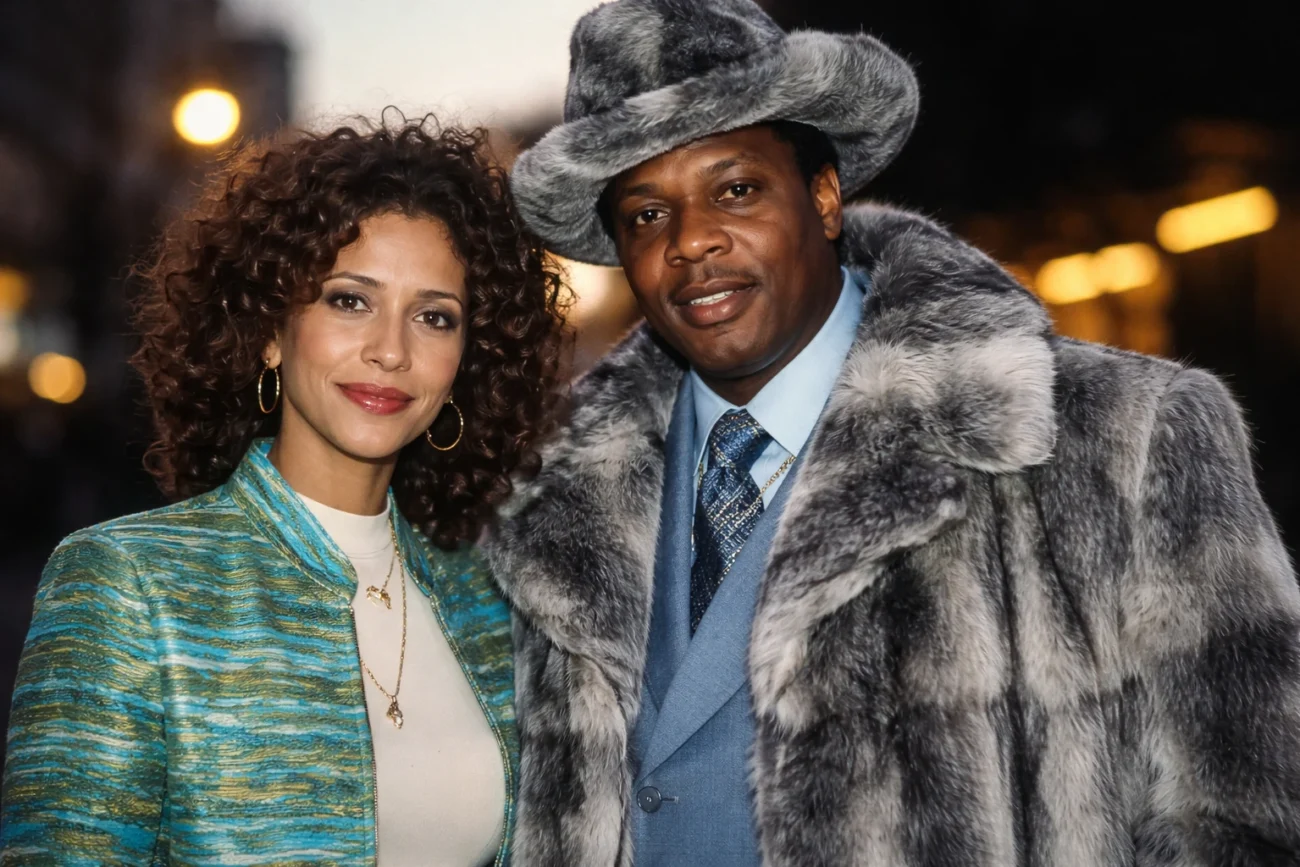
The image most people remember is not from a courtroom or a police file, but from a film: a poised woman in furs, sitting beside one of the most notorious drug traffickers in American history. That image, popularized by American Gangster, turned Frank Lucas’s wife into a symbol of glamour and loyalty. The reality of Julianna “Julie” Farrait’s life is far more complicated, shaped by love, fear, wealth, collapse, and a long aftermath that stretched well beyond Lucas’s criminal peak.
Julianna Farrait was not simply the spouse of a famous criminal. She lived through the rise and fall of a drug empire, faced her own legal troubles, and remained tied to Frank Lucas for decades, even after prison, witness protection, and public scrutiny. Her story sits at the intersection of myth and record, where personal memory, media portrayal, and legal history often collide.
Early Life and Background
Julianna Farrait was born in Puerto Rico, likely around 1939 or 1940, based on later reporting about her age. Public records about her early life remain limited, and much of what circulates online is either unverified or repeated without clear sourcing. What is known is that she grew up in Puerto Rico before eventually moving to the United States as a young adult.
Accounts describe her as striking and socially confident, someone who stood out in her environment. Some sources refer to her as having been a homecoming queen, which aligns with descriptions of her appearance and presence. Claims that she held a national beauty title, such as Miss Puerto Rico, are far less certain and are not strongly supported by verifiable records.
Her move to New York in the late 1960s marked a turning point. Like many young people leaving Puerto Rico at the time, she was seeking opportunity and a different life. It was in this new environment, far from home, that she encountered Frank Lucas.
Meeting Frank Lucas
The story of how Julianna Farrait met Frank Lucas has been told in different ways, and those differences matter. In some accounts associated with Lucas himself, the meeting is described in cinematic terms, involving travel and chance encounters. These versions have circulated widely, in part because they fit the larger-than-life narrative that surrounded Lucas in later years.
Farrait, however, offered a more grounded account. In an interview later quoted in reporting, she said she met Lucas in New York after arriving from Puerto Rico, specifically at a nightclub. This version is more consistent with the everyday reality of the time, where nightlife spaces often served as meeting points for people from different worlds.
What is clear is that their relationship developed quickly. Lucas, already involved in heroin trafficking, was building his network and expanding his influence. Farrait entered his life during a period when his operation was growing and his public profile remained relatively low compared to what it would later become.
Marriage and Life During Lucas’s Rise
Julianna Farrait became Frank Lucas’s wife during the years when his drug empire was reaching its peak. Lucas was known for his control over heroin distribution in New York, particularly in Harlem, and for his claims of sourcing drugs directly from Southeast Asia. Whether all of those claims were entirely accurate has been debated, but there is no doubt that he was deeply involved in large-scale trafficking.
For Farrait, this period brought both privilege and tension. She lived in a world of wealth that included expensive clothing, luxury cars, and high-end social experiences. By her own account, she enjoyed parts of that lifestyle, including travel and material comfort.
But the marriage was not without conflict. According to later reporting, Farrait said she did not fully understand the extent of Lucas’s activities at first. When she realized the scale of his involvement in drug trafficking, she objected and even left him at one point. That tension between attraction to wealth and discomfort with its source became a recurring theme in her story.
Their daughter, Francine Lucas-Sinclair, later described her mother as glamorous but also deeply affected by the instability of their life. The family existed in a space where luxury and danger were always close together.
The 1975 Raid and Its Consequences
Everything changed in January 1975. Law enforcement authorities, including federal agents and local police, carried out a raid on the Lucas family home in Teaneck, New Jersey. The operation was part of a broader effort to dismantle Lucas’s organization, which had already come under investigation.
During the raid, Farrait became directly involved in one of the most widely reported moments of the case. Accounts say she attempted to dispose of large amounts of cash by throwing suitcases out of a window, shouting for others to take them. The money, reportedly hundreds of thousands of dollars, was quickly recovered by authorities.
This moment has been repeated in numerous retellings because it captures the sudden collapse of a powerful operation. For Farrait, it also marked the point where she moved from being seen as a spouse to someone caught in the legal fallout.
She was charged and later served time in connection with the case. The exact length of her imprisonment is not consistently reported, with some sources suggesting months and others indicating years. What remains clear is that she faced real legal consequences and experienced incarceration during this period.
Family Disruption and Witness Protection
After Frank Lucas began cooperating with authorities, the family’s situation shifted again. Cooperation brought reduced sentences for Lucas but also introduced new risks. As a result, members of the family, including Farrait and their children, entered the federal witness protection program.
This period was marked by relocation and strict secrecy. According to later accounts from their daughter, the family spent time living under assumed identities, including a stay in Albuquerque, New Mexico. They were instructed not to discuss their past, a condition that added emotional strain to an already difficult situation.
Eventually, Farrait and her daughter returned to Puerto Rico, where they stayed with extended family. This move represented both a return to familiar ground and a retreat from the life they had known in the United States. For Farrait, it was a period of rebuilding, though the shadow of the past remained.
Relationship With Frank Lucas After Prison
Despite the upheaval, Julianna Farrait and Frank Lucas remained connected. Lucas was released from prison after serving part of his sentence, and the two eventually reunited. Their relationship, while tested by years of legal trouble and separation, did not end in a permanent break.
By the early 2000s, the couple was living in New Jersey. Public accounts describe them as older, quieter, and far removed from the scale of activity that had once defined their lives. Their daughter, writing about this period, described a more subdued household, one shaped by reflection and the passage of time.
Farrait continued to play a role in family life, including helping care for grandchildren. This stage of her life contrasts sharply with the earlier years of wealth and danger, offering a glimpse of a more ordinary existence after decades of turmoil.
The 2010 Arrest in Puerto Rico
Just as it seemed that Farrait’s connection to crime belonged to the past, she was arrested again in 2010. The arrest took place in Puerto Rico and was linked to a federal drug investigation involving cocaine distribution.
Authorities alleged that Farrait had participated in arranging a drug transaction involving several kilograms of cocaine. According to reports, she met with an informant and was present during an exchange that led to her arrest. The charges carried serious penalties, reflecting the scale of the alleged activity.
This event surprised many observers, as it suggested that Farrait had re-entered the drug world decades after her first conviction. It also complicated the narrative of her life, raising questions about the extent of her involvement and the choices that led her back into legal trouble.
Farrait herself had previously spoken about being drawn to risk and missing aspects of her earlier lifestyle. While those statements do not fully explain her actions, they offer some insight into the mindset that may have influenced her decisions.
Public Image and Cultural Portrayal
Julianna Farrait’s public image has been shaped as much by film and media as by documented fact. American Gangster, released in 2007, brought the story of Frank Lucas to a global audience and introduced a dramatized version of his wife, played by actress Lymari Nadal.
The film portrayed her as elegant, loyal, and emotionally anchored, providing a human counterbalance to Lucas’s criminal life. While the performance resonated with audiences, it also simplified a far more complicated reality.
Critics and legal figures connected to the original case have pointed out that the film takes significant liberties with the facts. This includes not only the depiction of Lucas’s operations but also the portrayal of the people around him, including his wife.
As a result, Farrait’s image in popular culture often reflects the film more than the historical record. This gap between representation and reality continues to shape how she is perceived.
Later Years and Public Appearances
One of the last widely documented public moments involving Julianna Farrait came in 2019, following the death of Frank Lucas. He died on May 30 of that year, at the age of 88, after a long life that had moved from crime to cooperation to relative obscurity.
Farrait attended his funeral in Newark, New Jersey, appearing alongside family members and others connected to Lucas’s life. Photographs from the event confirm her presence, making it one of the clearest recent records of her public life.
Beyond that point, reliable information about her whereabouts or current status is limited. There has been no widely confirmed public reporting detailing her life after 2019, and claims about her death or current residence vary without strong evidence.
This lack of clear information underscores a broader truth about her story. Despite periods of intense visibility, much of her life has remained private or only partially documented.
Personal Life and Family
Julianna Farrait and Frank Lucas had children together, including their daughter Francine Lucas-Sinclair, who has spoken publicly about her experiences. Francine’s perspective provides one of the most personal windows into the family’s life, offering insight into both the privileges and the hardships they faced.
Growing up in a household shaped by crime, wealth, and eventual collapse had lasting effects. Francine has described periods of instability, fear, and emotional difficulty, as well as efforts to build a different life as an adult.
Farrait’s role as a mother appears in these accounts as complex and human. She was both a participant in the environment that shaped her children’s early years and someone who later tried to provide stability and care.
Financial Life and Net Worth
There are no reliable, publicly verified estimates of Julianna Farrait’s personal net worth. During Frank Lucas’s peak years, the family had access to significant wealth, much of it derived from illegal activity. That wealth included cash, property, and luxury goods.
After Lucas’s arrest and the subsequent seizures by law enforcement, much of that wealth was lost. The family’s financial situation changed dramatically, and later accounts suggest a far more modest lifestyle.
Because Farrait’s financial history is closely tied to criminal activity and legal proceedings, it is difficult to assign a meaningful net worth figure. Any estimates that appear online should be treated with caution unless supported by credible sources.
Frequently Asked Questions
Who was Frank Lucas’s wife?
Frank Lucas’s wife was Julianna “Julie” Farrait, a Puerto Rican woman who became closely associated with his life and criminal career. She lived through the height of his drug empire, faced legal consequences herself, and remained connected to him for decades. Her story reflects both personal loyalty and the challenges of living within a criminal environment.
Was Julianna Farrait involved in crime?
Yes, she was involved in criminal cases at different points in her life. She served time after the 1975 raid connected to Frank Lucas’s organization and was later arrested again in 2010 in Puerto Rico on cocaine-related charges. The extent of her involvement at various stages is not always fully clear, but she was more than a passive observer.
Is Julianna Farrait still alive?
As of the last confirmed public record in 2019, she was alive and attended Frank Lucas’s funeral. There is no widely confirmed information about her status after that date. Claims about her current life or death should be treated carefully unless backed by reliable reporting.
Did Julianna Farrait and Frank Lucas stay married?
Yes, despite periods of separation and legal trouble, they remained connected and were still associated as a couple later in life. They reunited after prison and lived together in New Jersey during their later years.
Was she really a beauty queen?
There is no strong public evidence confirming that she was Miss Puerto Rico, although she is often described as having been a homecoming queen or a woman known for her beauty. The more elevated beauty-title claims appear to be exaggerated over time.
How many children did she have?
She had children with Frank Lucas, including their daughter Francine Lucas-Sinclair. Francine has spoken publicly about her upbringing and provides one of the most detailed accounts of the family’s life.
Conclusion
Julianna Farrait’s life does not fit neatly into a single narrative. She was a young woman who left Puerto Rico in search of something more, only to find herself in the center of one of America’s most notorious drug operations. She experienced wealth, loss, prison, and a long aftermath that never fully escaped public attention.
Her story is often told through the lens of Frank Lucas, but it stands on its own as well. It is a story about choices, circumstances, and the ways people navigate environments that offer both opportunity and danger. The glamour that surrounds her image in popular culture only hints at the reality beneath it.
What remains most striking is how much of her life exists between the lines of official records and media portrayals. She appears at key moments, then recedes, leaving behind a trail that is incomplete but deeply human. That tension between visibility and privacy is part of what keeps people searching for her story.
In the end, Julianna Farrait is remembered not just as Frank Lucas’s wife, but as a figure shaped by a complicated life that refuses to be reduced to a single version of events.
