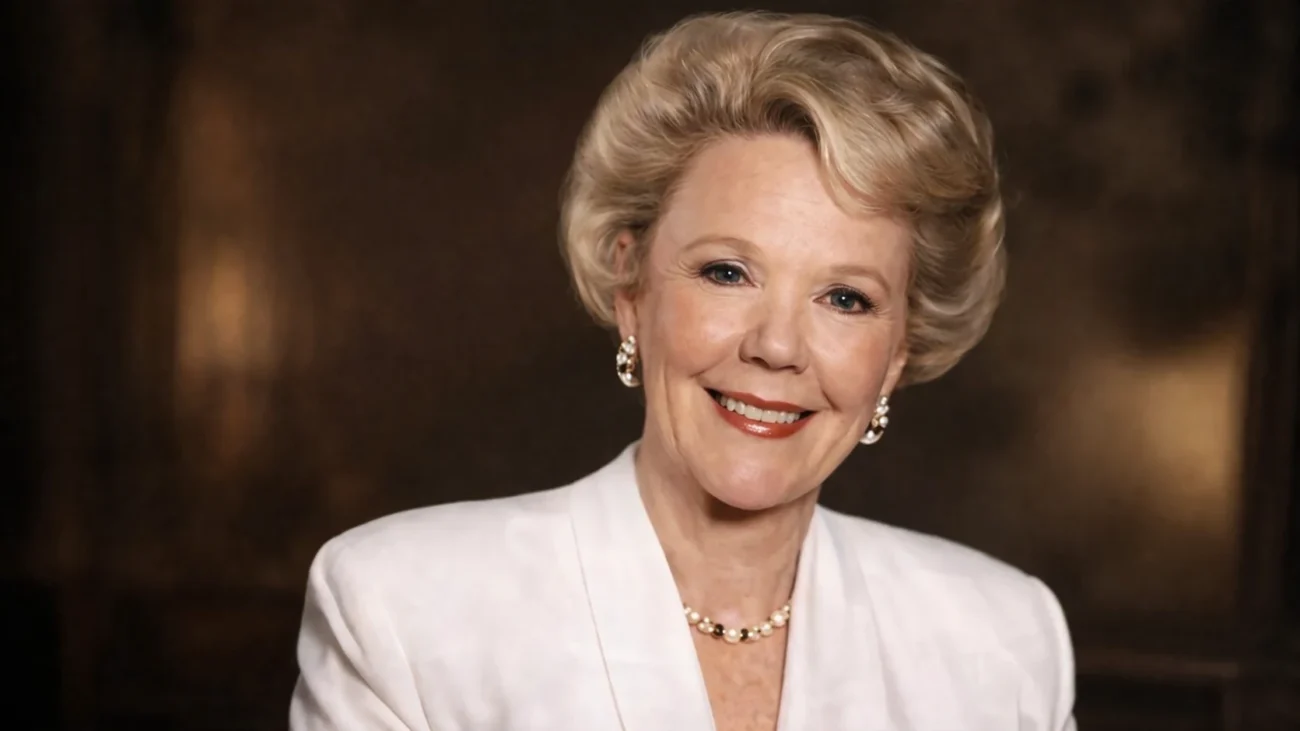
In the vast, carefully documented history of McDonald’s and its architect Ray Kroc, one name appears only in brief mentions, often as a footnote: Marilyn Kroc Barg. She was his only child, born decades before the golden arches became a global symbol, and she died before the Kroc fortune reached its full public scale. Yet her life continues to attract curiosity, not because of what she built in public view, but because of how little is firmly recorded about her at all.
That absence has created a curious tension. On one side sits a small body of verifiable facts: a birth in the 1920s, a marriage, a quiet adulthood, and a death in 1973. On the other side is a growing body of online storytelling that fills those gaps with confident detail. Sorting between the two reveals something more interesting than a typical biography. It reveals how easily a private life can be reshaped when attached to a famous name.
Early Life and Family Background
Marilyn Janet Kroc was born in 1924, the only child of Raymond Albert Kroc and Ethel Janet Fleming. At the time, her father was not yet the man associated with a fast-food empire. He was still building a career as a salesman, working in a series of ventures that would only later lead him to the opportunity that defined his life. That context matters because it means Marilyn’s early years unfolded long before wealth and public recognition entered the picture.
The Kroc family lived in the Chicago area, where Ray had been raised after his parents emigrated from Europe. His early working life was restless and varied, and his marriage to Ethel, which began in 1922, reflected a more conventional domestic period before the turbulence that would come later. Marilyn grew up in that environment, one shaped by ambition but not yet by the extraordinary success that would follow.
Not many people know this, but Ray Kroc did not encounter the McDonald brothers’ restaurant until 1954, when Marilyn was already an adult. By then, she had lived through her father’s formative years, including his attempts at business and his time as a traveling salesman. Her upbringing, therefore, was not that of a child raised in the shadow of a corporate empire, but rather in a household still finding its footing.
Her parents’ marriage eventually ended in divorce in 1961, after nearly four decades together. That long marriage, followed by separation, marked a turning point in the family dynamic. By that time, Ray Kroc’s career had begun to transform, and Marilyn’s life had moved into its own independent phase.
Growing Up Before McDonald’s Fame
The timing of Marilyn’s life is one of the most misunderstood aspects of her story. Many modern portrayals assume she was raised amid wealth and corporate power, but the truth is more complicated. Her formative years came before McDonald’s became a household name, and before her father became one of the most recognizable figures in American business.
During her youth and early adulthood, Ray Kroc was still working to establish himself. He sold paper cups, played piano in local venues, and pursued various business ventures with mixed success. This period, often overshadowed by his later achievements, was the backdrop of Marilyn’s childhood and early adult life.
What’s surprising is how little documentation exists about her education or early ambitions. There are no widely cited records of specific schools, degrees, or career aspirations. This lack of detail does not suggest absence of activity, but rather a life that did not intersect with public institutions in ways that left a strong archival trail.
That said, it is reasonable to assume she experienced the shifting fortunes of her father’s career firsthand. By the mid-1950s, as McDonald’s began to expand, Marilyn would have been in her thirties, witnessing the rapid transformation of her family’s financial and social position. Yet she did not emerge as a public figure alongside that rise.
Marriage and Personal Life
Marilyn later married and became known as Lynn J. Barg, taking her husband’s surname. Public records identify her husband as James W. Barg, and her name appears in a brief obituary notice under that married identity. Beyond that, details about her marriage remain limited, and there is little widely confirmed information about her day-to-day life as a wife or her social circle.
The truth is, her personal life was largely private, even by the standards of the time. Unlike many individuals connected to powerful families, she did not maintain a visible presence in society pages, corporate boards, or public charitable organizations. That absence is striking, especially given the scale of her father’s later success.
Some sources claim she had no children, though this detail is not consistently confirmed across primary records. In the absence of stronger documentation, it is best treated as likely but not definitively established. What is clear is that she did not leave behind a widely documented lineage that continued her public identity.
Here’s where it gets interesting. Many online accounts attempt to fill this quiet period with stories of hobbies, social influence, or elite lifestyles. These narratives often appear polished but lack strong sourcing. The more reliable picture is simpler: Marilyn lived outside the spotlight, even as her father stepped directly into it.
Relationship with Ray Kroc
The relationship between Marilyn and her father is one of the least documented aspects of her life. Ray Kroc’s own public statements and biographies focus heavily on his business pursuits, his marriages, and his philosophy of entrepreneurship. References to his daughter are brief and often limited to identifying her as his only child.
This does not mean their relationship lacked depth. It simply reflects the way public biographies are shaped, prioritizing business achievements over family detail. Still, the limited record leaves room for interpretation, and it is important not to project assumptions where evidence is thin.
Ray Kroc’s later marriages, including his marriage to Joan Kroc, shifted the family’s public narrative. Joan would become a central figure in the Kroc legacy, particularly in philanthropy after Ray’s death. Marilyn, by contrast, remained largely absent from those public narratives, in part because she died before that phase of the family’s story unfolded.
The truth is, Marilyn’s place in the Kroc family history is defined more by timing than by documented interaction. She lived through her father’s rise but did not participate in the public legacy that followed.
Health and Death
Marilyn Kroc Barg died in September 1973 in Arlington Heights, Illinois, at the age of 48. Her death was noted in a brief obituary that identified her as the wife of James W. Barg and the daughter of Ray Kroc. The notice did not include extensive biographical detail, nor did it publicly state a cause of death.
However, several biographical sources about Ray Kroc link Marilyn’s death to diabetes. These same sources note that Ray himself lived with diabetes and arthritis, and that the Kroc family’s philanthropic efforts later included significant support for medical research in these areas. This connection suggests that her illness may have had a lasting impact within the family.
That said, the absence of detailed medical documentation in public records means the exact circumstances of her death are not fully described in accessible sources. The most responsible way to present this information is to acknowledge the link reported in reputable biographies while recognizing the limits of the available detail.
Her death came at a time when Ray Kroc’s business success was still expanding. McDonald’s had already become a major force, but the full scale of the Kroc fortune and philanthropic reach would not emerge until later. Marilyn did not live to see that chapter of the family’s story.
The Kroc Legacy and Marilyn’s Place in It
Ray Kroc died in 1984, more than a decade after Marilyn. By that time, McDonald’s had become a global brand, and the Kroc name was firmly embedded in American business history. After his death, Joan Kroc became one of the most prominent philanthropists in the United States, donating billions of dollars to causes ranging from education to public broadcasting.
This is where confusion often arises. Because Marilyn was Ray Kroc’s only child, some assume she played a central role in the distribution or direction of the Kroc fortune. In reality, her earlier death meant she was not part of the philanthropic era that defined the family’s later public identity.
There is, however, a more indirect connection. The Kroc Foundation, established during Ray Kroc’s lifetime, supported research into diseases that affected the family, including diabetes. If Marilyn did indeed die from complications related to diabetes, as several sources suggest, then her life and death may have influenced the family’s focus on medical research.
But here’s the thing. Influence does not always leave a paper trail. While it is reasonable to see her as part of the family context that shaped these priorities, it is not accurate to attribute leadership or public roles to her without clear evidence.
Public Image and Misconceptions
In recent years, Marilyn Kroc Barg has become the subject of a quiet wave of online interest. Much of this interest is driven by curiosity about the Kroc family and by the natural human tendency to fill in gaps with narrative. Unfortunately, this has led to the spread of claims that are not well supported.
Some websites describe her as a philanthropist, a business figure, or even a contributor to McDonald’s success. Others assign her detailed hobbies, social influence, or financial standing without citing primary sources. These portrayals often repeat one another, creating the illusion of consensus.
The truth is more restrained. The strongest available evidence supports a portrait of a private individual whose life intersected with history through family rather than through public action. That does not make her story less meaningful, but it does require a more careful approach.
What’s surprising is how quickly repetition can transform uncertainty into apparent fact. In the absence of strong documentation, responsible biography requires restraint. It is better to leave questions open than to answer them with unsupported detail.
Net Worth and Financial Context
Because Marilyn Kroc Barg was the daughter of a billionaire, questions about her wealth are common. However, there is no widely confirmed estimate of her personal net worth at the time of her death. Any figures that appear online should be treated with caution unless they are tied to verifiable financial records.
Her financial context is closely tied to timing. She died in 1973, before the full expansion of McDonald’s and before the enormous philanthropic distributions associated with Joan Kroc. While Ray Kroc was already wealthy by that point, the scale of his fortune continued to grow in the years that followed.
This means that Marilyn’s financial position, while likely comfortable, cannot be assumed to match the later scale of Kroc family wealth. Without detailed estate records or confirmed reporting, it is not possible to present a precise figure.
Where Marilyn Kroc Barg Fits Today
Today, Marilyn Kroc Barg remains a figure defined by her connection to a larger story. She is remembered primarily as Ray Kroc’s only child, a fact that anchors her place in history even as details about her life remain limited.
Her story also reflects a broader truth about historical memory. Not every life connected to a famous name is documented with equal clarity. Some individuals remain at the edges of the record, their lives preserved in fragments rather than in full narratives.
For readers, that may feel unsatisfying. But it also offers a reminder that biography is shaped by evidence, not by expectation. Marilyn’s life, as far as it can be reconstructed, was quieter than many assume, and that quietness is part of what defines it.
Frequently Asked Questions
Who was Marilyn Kroc Barg?
Marilyn Kroc Barg was the only child of Ray Kroc, the businessman who expanded McDonald’s into a global company. She was born Marilyn Janet Kroc in 1924 and later became known as Lynn J. Barg after marriage. Her life remained largely private, and she is not widely documented outside of family references.
Did Marilyn Kroc Barg work for McDonald’s?
There is no strong evidence that she held a formal role within McDonald’s. Company histories and biographies of Ray Kroc do not list her as part of the business’s leadership or development. While she was connected to the company through her father, her own involvement appears limited or undocumented.
How did Marilyn Kroc Barg die?
Marilyn died in September 1973 at the age of 48. Some biographical sources suggest she died from diabetes, though her public obituary did not specify a cause of death. The available evidence supports a connection to health issues within the Kroc family but does not provide detailed medical records.
Did Marilyn Kroc Barg have children?
There is no widely confirmed public record indicating that she had children. Some sources state that she did not, but this detail is not consistently documented in primary records. As a result, it is best treated as unconfirmed.
Was Marilyn Kroc Barg wealthy?
As the daughter of Ray Kroc, she likely lived comfortably, especially in her later years. However, there is no reliable public estimate of her personal net worth. She died before the Kroc fortune reached its peak, which makes assumptions about her wealth difficult to verify.
Is Marilyn Kroc Barg connected to Ronald McDonald House Charities?
There is no evidence that she was directly involved in founding or leading Ronald McDonald House Charities. The first Ronald McDonald House opened in 1974, after her death, and the broader organization developed later. Any connection is indirect, through the Kroc family.
Conclusion
Marilyn Kroc Barg’s life does not fit the expectations that often come with a famous surname. She was not a public figure, not a business leader, and not a widely documented philanthropist. Instead, she lived largely outside the spotlight, even as her father stepped into one of the most visible roles in American business.
Her story is shaped as much by what is missing as by what is known. The fragments that remain suggest a life lived in relative privacy, marked by family ties rather than by public achievements. That may not satisfy every curiosity, but it offers a more honest account than the embellished narratives that have emerged online.
There is also something quietly powerful in that honesty. Marilyn’s life reminds us that history is not only made by those who stand at the center of attention. It is also shaped by those who remain just beyond it, connected to major events but not defined by them.
For readers willing to accept uncertainty, her story becomes clearer. Marilyn Kroc Barg was part of a remarkable family, but her life followed its own path, one that remains largely private, and in many ways, still unknown.
